
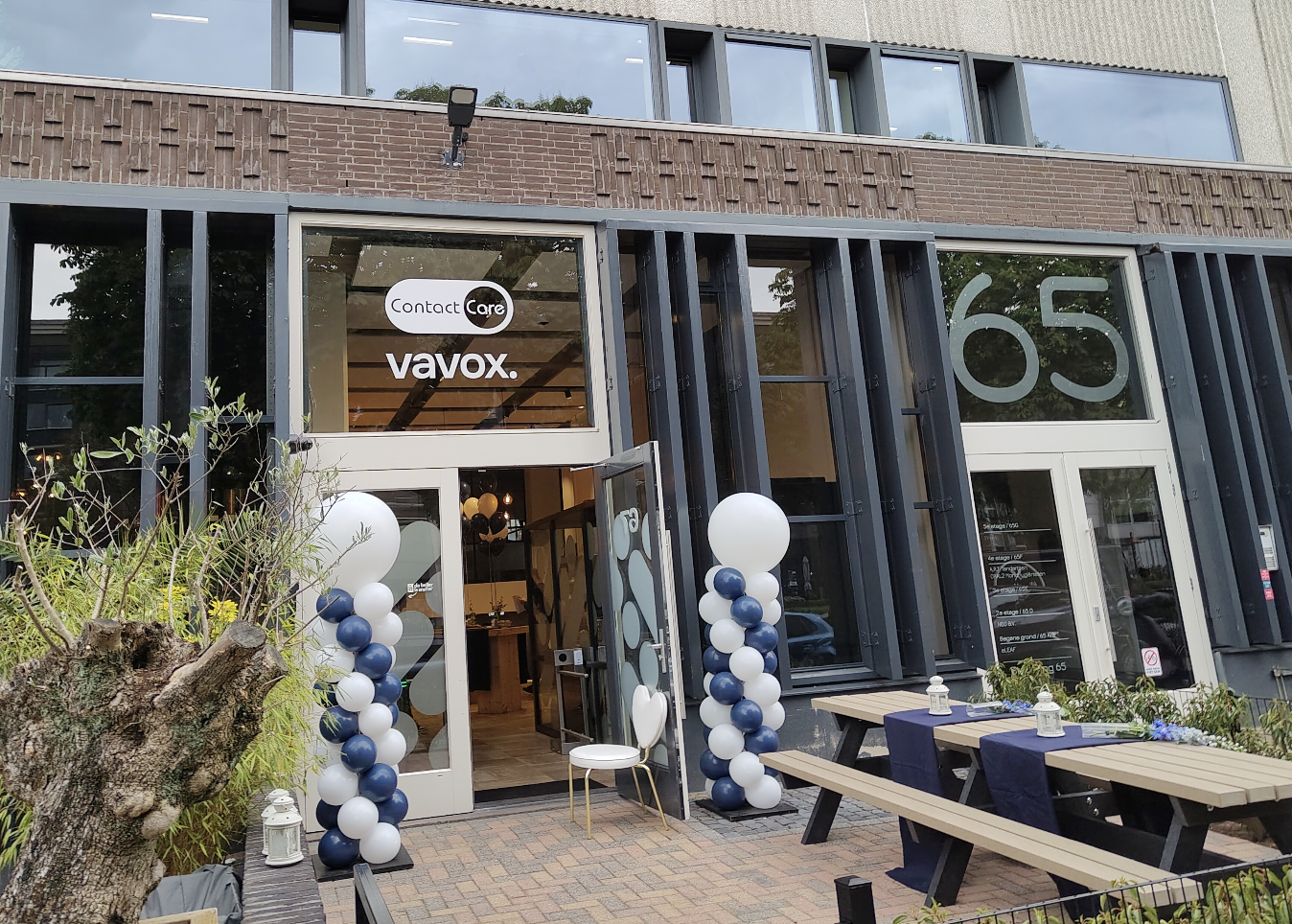
 Facilities contact center ContactCare has opened another new location. The branch at Piet Mondriaanplein near Amersfoort Central Station has been exchanged for a location a few hundred meters away, on the Stadsring. The new building was officially opened yesterday.
ContactCare is constantly on the move: less than half a year ago, a new location was opened in Eindhoven opened with 55 workstations. And at the beginning of this year, Meerding opened a second branch in Suriname, which brings the capacity in that country to 160 workplaces.
The new location in Amersfoort on the Stadsring is not a classic expansion. With 35 workstations, the new building is slightly smaller than the location at Mondriaanplein (with 135 workstations). Meerding can understand that this change might evoke associations with downsizing. However, the number of workstations in the office is no longer the benchmark for outsourced contact centers, he says. Employees who meet their targets, Meerding also explained during the opening, are allowed to work from home 60% of the time. The physical workspace in the office therefore has a different function: that of meeting and connection.
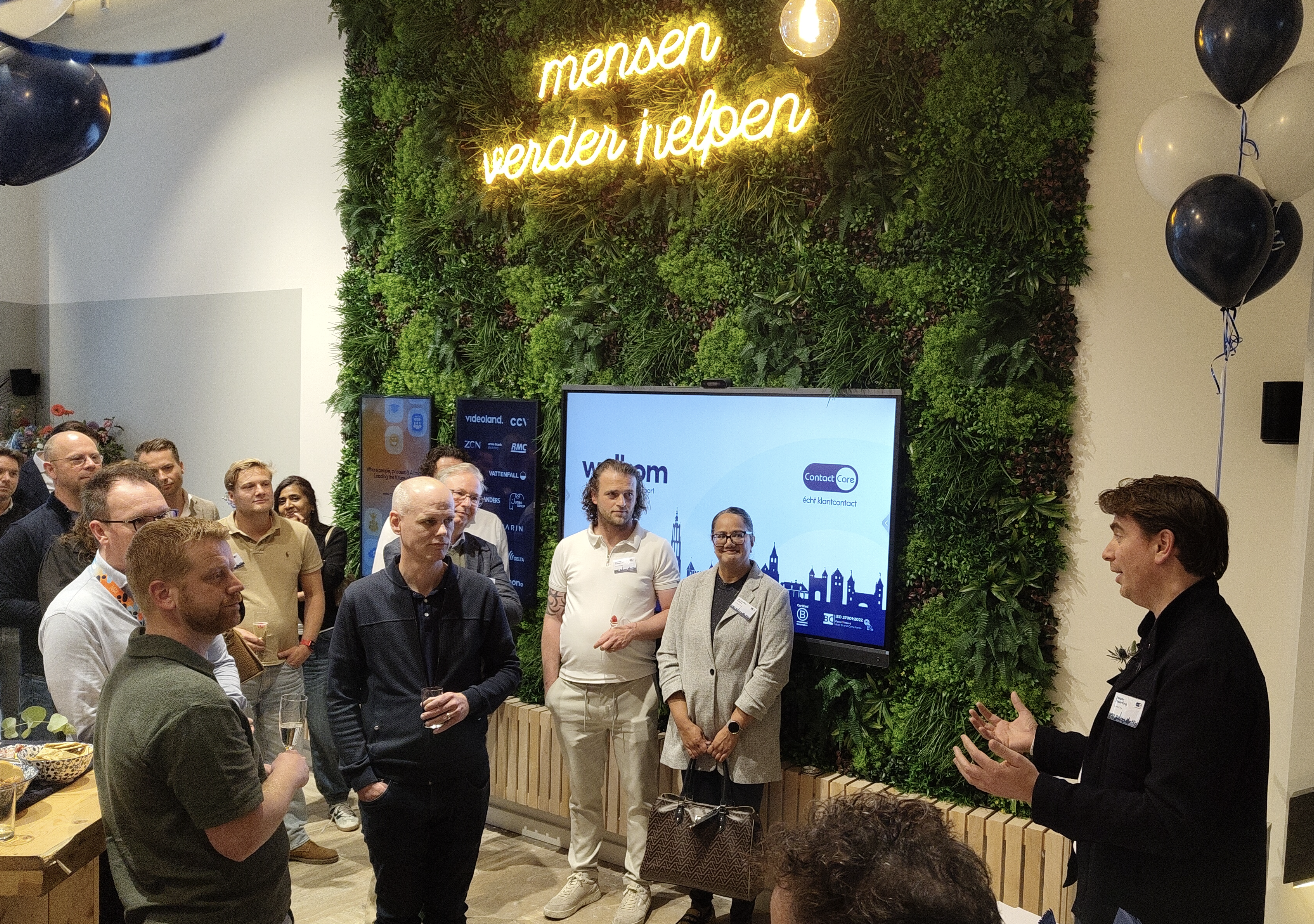 “An office should be a place where you want to be. A place full of energy. Where you meet colleagues and build something together,” said Meerding in his opening speech. “Everyone in customer contact claims it is difficult to find people, but we have been doing remarkably well here in Amersfoort for a number of years. People consciously choose ContactCare and remain thereafter. Last quarter our eNPS was +26. That is no coincidence, that is culture.”
Customer contact in the Netherlands and customer contact in Suriname
Meerding ContactCare is leading into the future with foresight, as becomes apparent when we speak to him a day after the opening. We also asked him if he had incorporated any new insights into the layout of the office on the city ring road. After some thought: “We now have soft music playing permanently. GenZ likes that; they aren't so used to silence. The noise cancelling on the headsets also works better with more and constant background noise. Also new is that employees can open and close this office themselves. Previously, that was done by a team leader or even by a security company. Now that is no longer necessary. People take responsibility, they have a tag and a checklist, and technology helps.”
Returning to ContactCare's strategy. BPOs based in the Netherlands and with extensive operations abroad increasingly claim that their profits are primarily generated in foreign branches. This creates the impression that the wage cost advantage yields a margin that offsets losses in the Netherlands. However, Meerding does not believe this. In ContactCare's case, the activities in the Netherlands are indeed profitable. He calculates that the gross margins of BPO players in Suriname are generally higher compared to the Netherlands, but lower in absolute terms per hour. On the other hand, customer contact in Suriname requires extra management attention. In the Netherlands, some players suffer from high turnover or absenteeism costs, according to Meerding, which makes it appear that Suriname is more profitable. It therefore depends on how you look at it and what you factor in.
In Suriname, too, the quality of work is gradually improving.
Until now, at ContactCare, primarily the less complex customer contact work has gone to Suriname, but Meerding says this is gradually changing. In his conviction, focusing on increasingly high-quality work is the only way to ensure sustainable business operations in Suriname. “The rest of the work will be further automated or eventually relocated,” he explains. He also says that a price war has been underway in the Surinamese BPO market for some time, with newcomers offering rock-bottom rates and larger players closing branches or already focusing on new locations in Africa, for example. This could indicate the beginning of a shake-out. Meerding: “If you focus solely on volume and low prices, your customers will eventually leave for the next offshore location, such as in Ghana or Madagascar, combined with AI translation solutions.”
Tough choices, such as fewer square meters
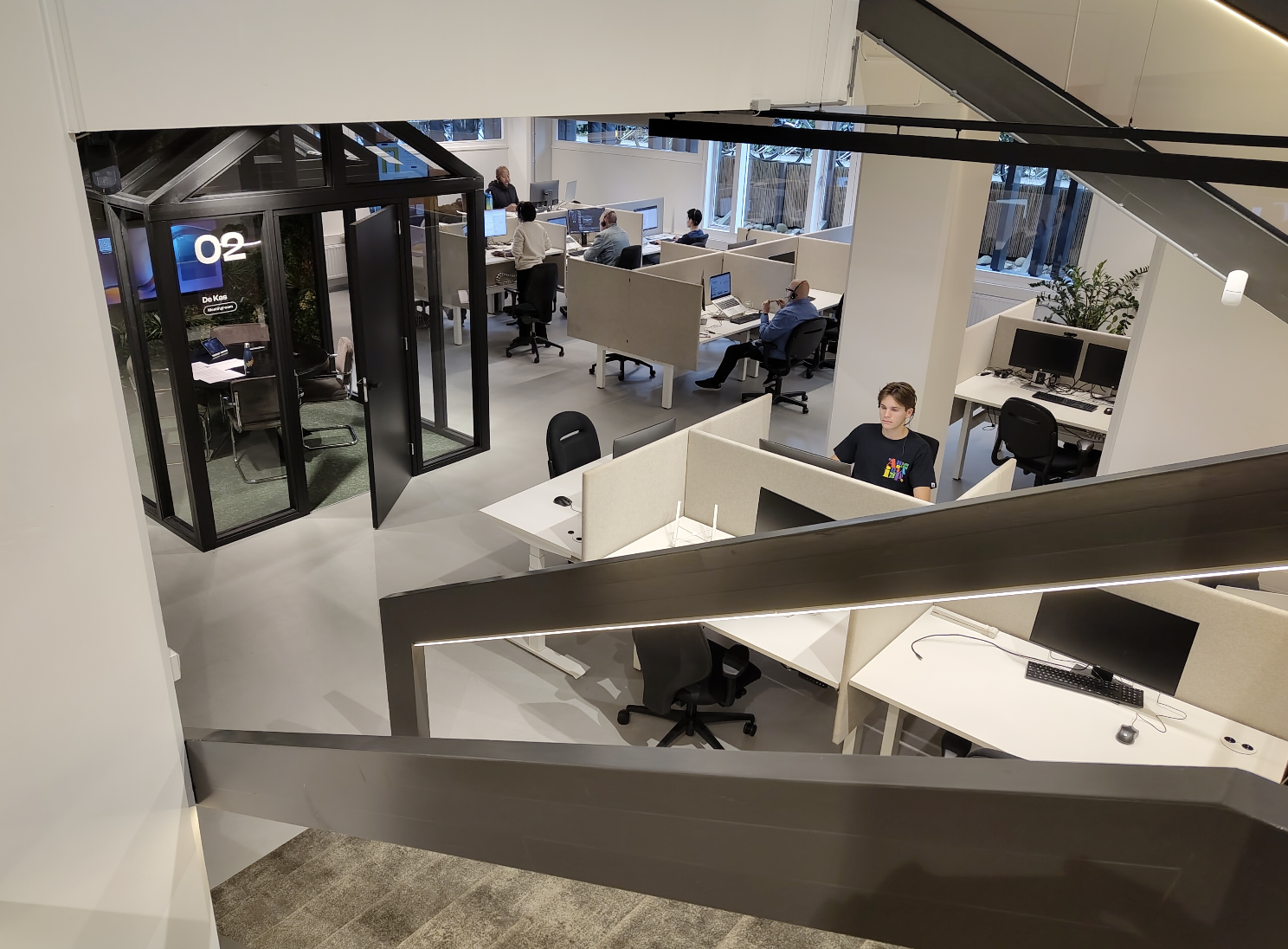 Emphasizing quality requires tough choices. These include scaling down on square footage in Amersfoort, through which ContactCare reduces costs by thousands of euros per month. They also involve limiting growth in Suriname, to no more than a few hundred employees. Meerding expects that larger enterprises will soon outsource relatively limited volumes as a result of digitalization and automation. Furthermore, he anticipates that outsourcers will opt for stable, mid-size players rather than the traditional top three global players or players who need to minimize costs because they are due to be sold soon. “With our own strategy, multiple branches, and our own AI customer contact software Vavox, we have positioned ourselves in the mid-market. This means that we are also attractive to a large group of other clients who traditionally looked to the top 3.”
Eating yourself up very slowly
Another change is the shift in revenue: from handling customer contacts to other services such as software and other services. That is still happening gradually, Meerding admits, but substitution is definitely the future. “We are slowly eating ourselves up. We are expanding development capacity. With our knowledge of operations, we can deploy AI better than an average software company that has no idea what a contact center is. At the same time, human customer contact continues to play a role. Once we have hosted our customers on our own platform, we can very precisely ‘tweak’ how contacts are handled.”
(Ziptone/Erik Bouwer)


Also interesting
-

BPO service provider ContactCare has opened a new location on Dr. JF Nassylaan in Paramaribo.
-

ContactCare starts with twenty workspaces in the heart of Antwerp, but has room to scale up further.
-

This summer, facilities contact center ContactCare is expanding with a new branch in Antwerp.