
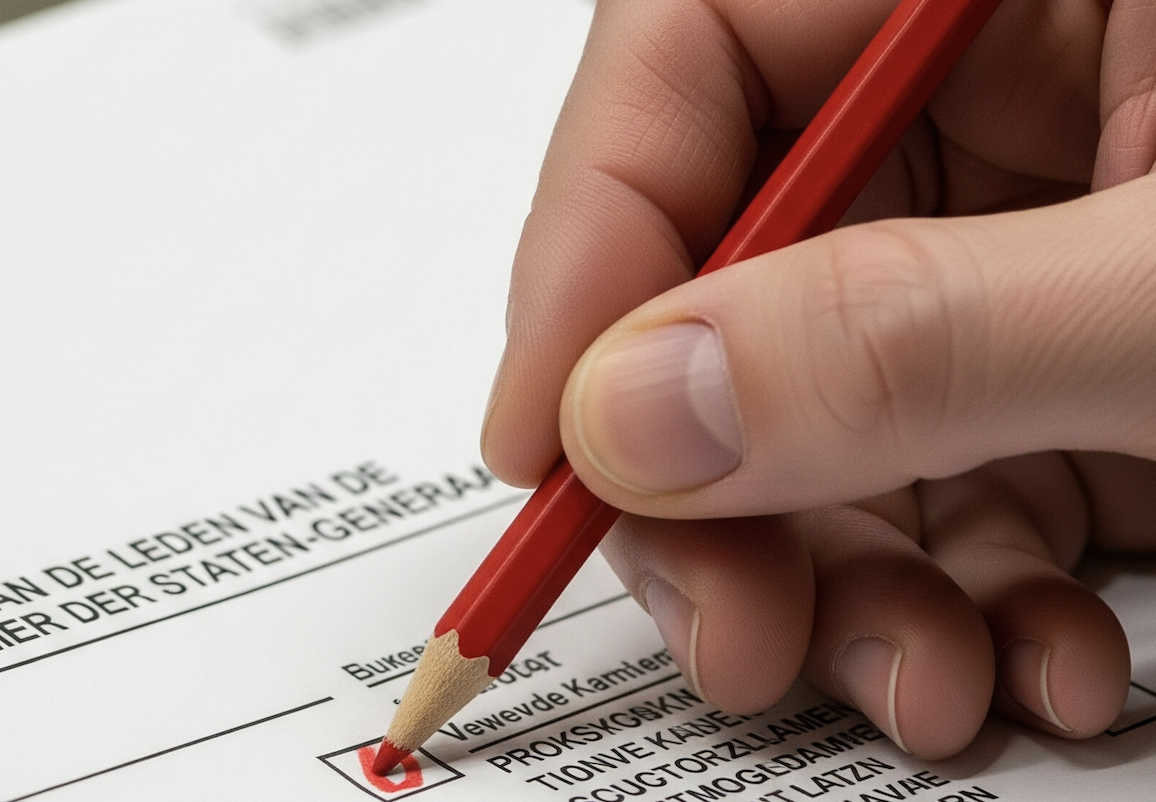
Image: Gemini/AI
In the run-up to the October 29th parliamentary elections, the Consumers' Association has mapped out how parties voted during the past cabinet term on issues that directly affect consumers.
The Consumers' Association examined the voting behavior of all political parties on 30 proposals since the last election in 2023. The proposals concerned energy, climate and the environment, healthcare and health, shopping and groceries, digital services, and consumer rights. The Consumers' Association finds it striking that the (former) coalition parties only agreed on 30% of the votes.
Telemarketing and Door-to-Door Sales – The Consumers' Association looked at the voting behaviour of political parties regarding adjustments to telemarketing rules: 'Charities and certain lotteries should be exempt from rules for door-to-door salespeople and telemarketing' (Source)
According to Sandra Molenaar, director of the Consumers' Association, the survey shows which parties are most supportive of consumers. Instead of "the many election promises that are bombarding us with new promises," the overview reveals the actual voting behavior of parties. The Consumers' Association emphasizes that this is not voting advice, but the association does want to help consumers make informed choices.
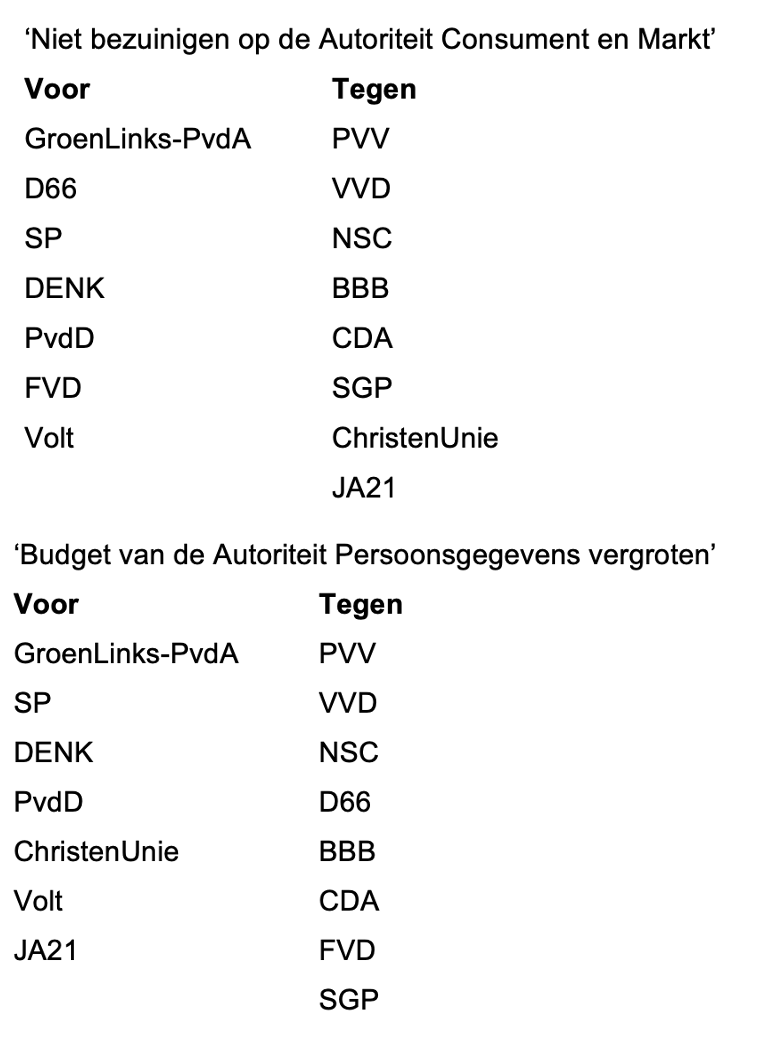
Source: Consumer Association
The Consumers' Association also notes that in an increasingly 'digital' world, the government is retreating. For example, a majority of the parties against expanding the budget of the digital watchdog, the Dutch Data Protection Authority. The voting behaviour on a motion on the preventing cuts to the Consumer and Markets Authority' has been mapped.
Without effective oversight and enforcement, rules are meaningless
Good consumer protection is an essential part of a healthy and fair economy. For this, sound laws and regulations on paper alone are not enough. Effective oversight and enforcement ensure that companies are actually held accountable when they violate laws and regulations, according to the union. Molenaar: "Just think of the data breach in the Population Survey. A strong supervisory body is needed. One that has the capacity and resources to take action and protect consumer rights."
More laws, rules and tasks; no more supervision
The Dutch Data Protection Authority (AP) has been given a significant number of new privacy protection responsibilities in recent years, including overseeing cookies and online tracking. Since 2023, the organization has also been the coordinating supervisory authority for algorithms and AI. A year ago, the AP received several million euros in additional funding to carry out these tasks. However, the government is keeping a tight rein on spending in the coming years, as evidenced by the Budget Memorandum.
The supervisory authority's budget will decrease from €55,8 million in 2025 to €53,5 million in 2026 and will continue to shrink slightly in subsequent years, ultimately reaching just under €51 million in 2030. In its 2025 Annual Plan, the AP indicated that the organization needs at least €100 million annually to properly perform all its tasks. This is also what the parliamentary inquiry committee on Fraud Policy and Services recommended to the cabinet in 2024.
'Untenable policy views'
During a debate in March 2025 about the effectiveness of the AP, the VVD and PVV in particular proved to be to be critical of the AP's actions“It appears that the AP, despite a budget that has been growing exponentially for years, regularly holds untenable policy views,” according to Member of Parliament Dral of the VVD.
(Ziptone/Consumer Association)


Also interesting
-

Almost 90% of consumers believe that chatbots make it more difficult to speak with real employees of a company.
-
Orders do not arrive or arrive later than promised, products are of poor quality or something different than ordered and the customer service…
-

Green Consultancy approaches consumers – without permission, under false names and false pretenses – for in-home energy advice.