
Image: Ziptone/AI
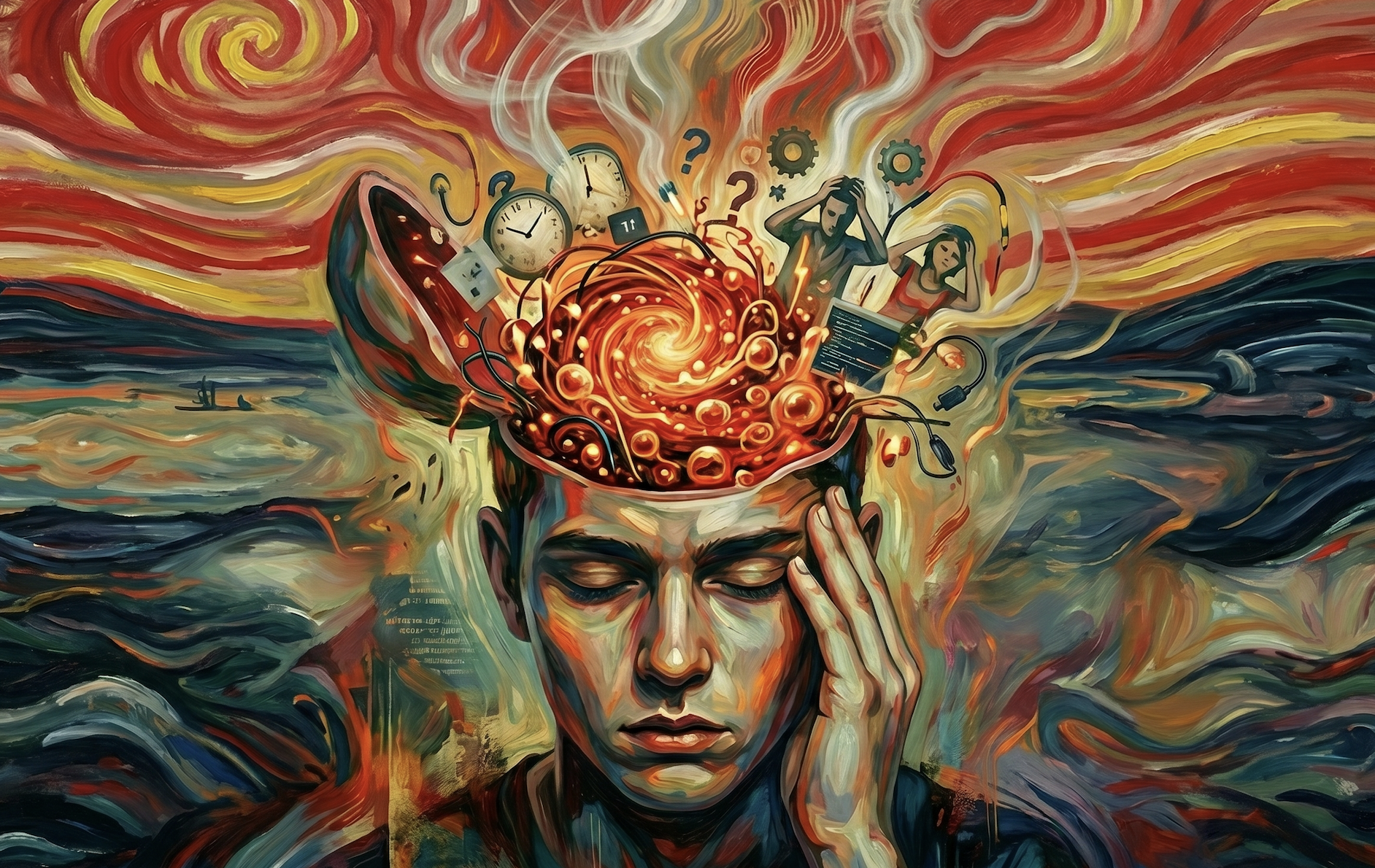
Charlotte Meindersma warns against brain fry. That risk exists in contact centers as well. How smart is the use of AI if it ultimately leads to higher turnover and absenteeism?
You may have heard of 'System 1' and 'System 2' thinking. Daniel kahnemanIn his book 'Thinking Fast and Slow', he describes how we can react quickly and primarily with System 1 and how we rationalize and solve more difficult problems with System 2. With generative AI, another system is added, researchers predict. Some call it System 0, others System 3. Whatever the case, it boils down to the fact that we are going to partially outsource our thinking to AI.
This only makes the 'computer says no' problem bigger.
Delegate
When we increasingly leave thinking, reasoning, and decision-making to AI, we begin to rely on it excessively. The more AI can take over from us, the more we assume the outcomes are correct. That may not be justified, but we do tend to check it less and less. In doing so, we not only lose autonomy, but we also experience less and less responsibility for what we do and decide with the help of AI.
And to make matters worse, the use of AI—when we outsource (thinking) work to it—is actually bad for our brains as well. We unlearn critical thinking when we let AI do too much of it. Our brains truly deteriorate because we don't have to use them as much. It would therefore not surprise me at all if, in a few decades, it turns out that more people are developing dementia or that we start suffering from dementia earlier. Simply because we are no longer keeping our brains sufficiently occupied, because we have outsourced too much to AI.
Incidentally, research has also shown that outsourcing all kinds of tasks to AI can have even more negative consequences for our mental well-being. If we let AI do too much work, it does not immediately result in a gain in efficiency. We mainly start working *differently*. For example, more switch tasks where we primarily switch tasks more frequently. While AI performs a small task for us, we then go and do something else ourselves. By the time AI finishes the task, you have to return to it to continue with that result. So, we are going to perform more tasks 'simultaneously'.
Brain fry
Moreover, a brief consultation with a colleague is no longer necessary. AI is already performing the work we were previously unsure about or couldn't do well ourselves. AI functions excellently as a sparring partner. However, we are now faced with intensive work; we have to do more in less time, and our brains no longer get a moment's rest while performing 'mindless' work. This can lead to so-called brain fry: Mental exhaustion, concentration problems, and a foggy head. That makes it harder to make decisions. So, that doesn't help us work better.
Aside from the fact that outsourcing work to AI is not very pleasant for our personal well-being, the world is also simply not as black and white as it is for AI. AI thinks in zeros and ones. Something is either the way it is or it isn't. It can even perform a probability calculation if you like. But it lacks any human dimension. Customization, emotion, and human circumstances cannot be taken into account in decisions. Consequently, creative human solutions are not possible, even though they are precisely what allow us to maintain high reputation and quality.
But if we trust the computer too much, or outsource too much to AI causing us to lose our sense of responsibility or suffer from brain fry, who actually benefits from the excessive use of AI? Not the employees. Nor the customers. And not your company's reputation either. People recognize automatic responses or feel like they are getting nowhere with the answers from an AI chat.
What is the trade-off for the savings?
It can indeed improve the general accessibility of customer service. A chatbot does not need to sleep. If the tools are not too expensive and can take over routine work from multiple people, it can save money because fewer people are needed.
That financial saving is nice if it actually materializes. At the same time, a disadvantage of AI is that customers are offered pre-packaged solutions that may be legally or procedurally correct, but do not always lead to satisfaction. The customer service representative who relies on AI will soon no longer come up with personal or creative solutions themselves, will not take initiative or responsibility, and may even suffer from burnout.
If only AI would answer 'no' to that and prevent it itself. Then we would have a truly real solution that benefits us.
(Ziptone/Charlotte Meindersma)


Also interesting
-
Of course, if AI takes over our computers, phones, and lives, something unexpectedly goes wrong. Who is…
-

Charlotte Meindersma on our digital hunger. It brings us a lot of convenience, but it also costs a lot. A better organization of…
-

Out of convenience and Dutch frugality, we have placed our digital fate in the hands of the US. Time to change that…