
 ASICS launched Agentforce at the beginning of this year. The sports brand views this as a first step towards an 'agentic enterprise'. More automation, including in customer contact, is necessary to prevent customer service from growing in proportion to rising revenue. AI chatbot Akira has his work cut out for him.
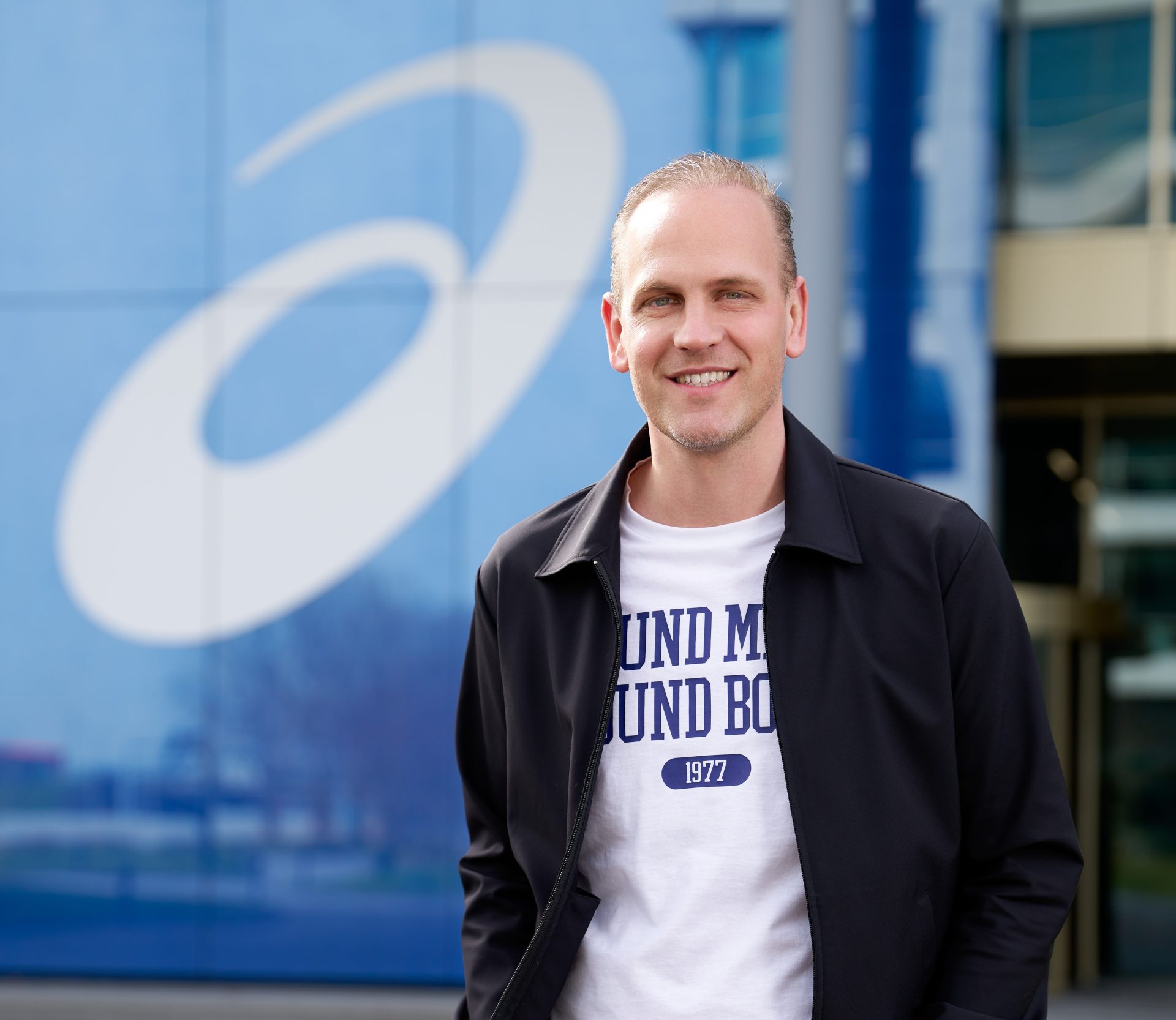
Bart Vos is Director Digital Product & Digital Strategy at ASICS. He manages four specialties: product management, consumer insights, product design for UI and UX, and the team of business analysts. One of the internal clients is customer service, but Vos's teams also handle ASICS' digital channels (the website and the mobile app) and the loyalty and OneASICS propositions. Furthermore, ASICS is organized into four regions: Europe, North America, Australia, and Japan. This combination means that Vos deals with, among others, the European customer service organization, which operates largely from Barcelona and processes approximately 200.000 direct-to-consumer contacts annually.
Direct to consumer
The sports brand has various ambitions. For instance, the brand has been working for ten years on expanding direct-to-consumer channels (hereinafter: DTC), which now account for 40% of revenue.
“There is healthy growth,” says Vos. “ASICS strives for a good balance between wholesale and DTC. For ASICS, the advantage of DTC is that you can build a closer relationship with the customer. That is why a separate business unit, ASICS Digital, has been established for this purpose. But the value of wholesale is also undeniable.”
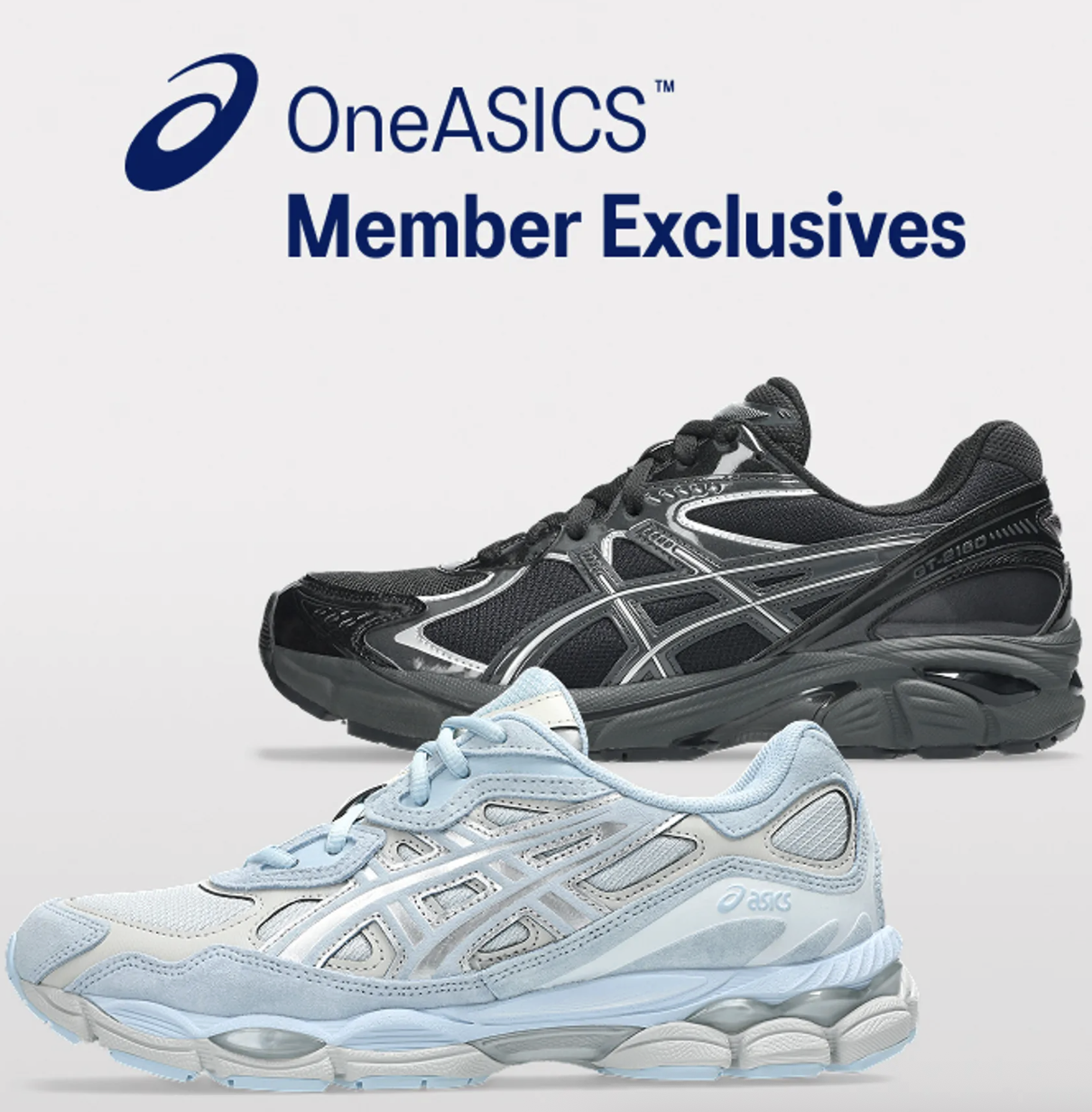 In addition, the brand aims to work towards more personalized service. A solid foundation for this already exists in the form of the successful online community OneASICS, which has over 23 million members. “We have invested heavily in our loyalty proposition over the past few years, and that is paying off: half of our online purchases now come from this community.”
Data in order
ASICS has put data management in order with Snowflake – a prerequisite for the large-scale deployment of AI and a major headache for many companies. This means that the customer data platform also offers opportunities for personalized service.
However, that currently happens only to a limited extent, says Vos, who also notes that customers primarily ask questions about transactions and hardly ever about, for example, personal training schedules.
We can, however, quickly identify the customer because customers use a single account for channels such as OneASICS, Runkeeper, ASICS.com, or the ASICS app. As a result, we also know whether a customer has registered for a race, for example, or whether a customer runs three times a week.
Using this type of information for personalized customer contact is therefore still on the to-do list. However, the insights are already being used for personalized marketing via the app, for example. “The LA Marathon took place in the US last month. We showed participants we know different content—think of specific product recommendations—than generic visitors to the website.”
Directions
Meanwhile, ASICS is also facing practical challenges. Recently, European customer service has been confronted with ASICS' growth. In addition to direct sales, DTC also means direct customer contact, and more revenue leads to more customer contact. As far as Vos is concerned, customer service is a value driver: “If there is contact, we want it to go well, so that retention and loyalty grow as well.”
However, on the other hand, ASICS customer service is only available on weekdays, from 9:00 to 13:00 and from 14:00 to 16:00. Moreover, the website lists quite a few days on which customer service is closed. That, in combination with a low score on Trustpilotraises questions.
Scaling up along the axis of technology
Vos acknowledges that the current volume means you are not always helped immediately, but this is based on “budgetary choices.” As far as Vos is concerned, Agentic AI – starting with service agent Akira – is an important part of the solution to handle the demand for support with the current workforce. ASICS is therefore scaling up not along the axis of employees, but along the axis of technology – and that is a conscious choice, says Vos.
The European organization also foresaw future challenges in the growing contact volumes and indicated a desire to do more with Akira 1.0 (the rules-based chatbot, based on Amalia, ed.). A great deal of time and energy was invested in that version for four years, and not without success: the bot was able to handle 48% of all inquiries, so that went quite well.
Rules-based bot: not future-proof
But Akira 1.0 also had limitations, says Vos. The technology used made it difficult to scale up further, which was necessary to handle other regions and volumes. “Think of integrations with various parts of Salesforce and the management costs,” explains Vos. “In addition, customer needs and the capabilities of that first chatbot diverged increasingly. I think many companies are now facing a similar legacy. Our digital team has therefore chosen to pursue further development using agentic AI, also based on the vision that we are entering the agentic era.”
For some companies, the investments made actually act as a barrier to rapid innovation, but for Vos, the business case was not particularly complicated. “Moreover, we learned a lot from Akira 1.0,” says Vos, who explains that all stakeholders, including the European customer service organization, were involved in the development of the AI-based version of Akira. It was developed over a period of four months, with a hackathon at the beginning of the process playing a key role.
Develop together
Even now, the teams are still actively involved in the product team. What do we see in the logs? What is the next use case we need to focus on to bring down our first-line volumes? But it also gives everyone a lot of energy: working with new technology.
Akira 2.0 has been live for two months now and handles hundreds of inquiries per day, ranging from frequently asked questions to status updates, cancellations, and returns, according to Vos. For its success, ASICS primarily looks at KPIs such as the containment rate (the percentage handled by Akira, which has increased from 48 to 62%) and the CSAT score provided by customers.
When are you an agentic enterprise?
Vos indicated it early in the conversation: ASICS wants to move further towards agentic enterprise. “We have an extensive vision on that,” he explains. “Akira 2.0 is a first step. We have mapped out the points in our entire customer journey where we see opportunities to address issues using agentic. For customer service, we see possibilities such as handling emails via Agentforce.”
In addition, we are looking at the commercial journey: helping customers find the right product. We have also considered the agent-to-agent concept: everything must be indexable for OpenAI, Gemini, or Perplexity. Furthermore, we want to facilitate all stakeholders within the organization with agentic capabilities that further increase productivity. And finally, we are examining what a digital product team should look like in the future.
Vos finds it difficult to say when ASICS will have transformed into an agentic enterprise. “Our organization works in planning periods of three years each; the current plan runs until the end of this year. I think we will be well on our way by the end of our next midterm plan. The vision is there, our data is pretty well organized, and we have the people and the technology to do it.”
(Ziptone/Erik Bouwer)
Also read:
Customer-facing AI chatbot the first step towards 'agentic enterprise'


Also interesting
-

Sandy Ruikes, senior manager Solution Engineering at Salesforce, talks about CCW2026 in Berlin.
-
Spindle AI's agentic technology focuses on using AI to model agentic scenarios and business outcomes…
-

CX platform vendor Five9 launches AI Agents and AI Trust & Governance toolkit, both based on the Five9 Agentic Experience Engine.