
Everything you need to know about data and analytics – the basic article. In this article we explain why a data strategy is indispensable for customer contact organizations. And what building blocks this strategy could consist of. We also show which data the customer contact department can use and what the pitfalls are of data-driven working in customer contact. This article is updated periodically.
Not ready for the future without a data strategy
Digitization provides more transparency in the market. Prices and conditions of services and products can be compared directly online everywhere and are in many cases close to each other. Companies can make the difference for consumers in terms of the quality of service. One of the ways to improve that service is to tailor it as much as possible to the individual customer. Providing personalized service means that you take into account the context of the customer and relevant circumstances at the time.
To make this possible, you need knowledge, information and data that enable you to respond to the customer's question or problem in the best possible way. That knowledge, information and data are also necessary to make self-service and chatbots work properly, for example. Knowledge and information come from data. Data is not only necessary to run processes (such as order to cash), it is also the basis of 'intelligent' work: making decisions based on more information instead of less.
A data strategy in itself makes little sense – you need data to achieve other goals. The same applies to data analysis: you don't do it for the sake of analysis, but to achieve another goal. For example, collecting insights for targeted improvement actions that contribute to the realization of the business objectives.
Do you start with the data or with the issues?
In terms of 'doing smart things with data', organizations can deal with data in roughly two ways: from a pragmatic perspective or from a strategic perspective.
It is pragmatic if, as a manager, you come across a problem and start looking for information as a result of that problem. Why is the workload increasing in the back office? If there is no information that answers your question, you can always dig into the available data.
With a clear data strategy, the starting point is the other way around. Then you think in advance about the meaning and role of data for your company or department. You have often already realized that data is an essential raw material for processes such as automation and/or analytics. A data strategy goes beyond thinking about data you need for management information; it is usually a plan for all data that is not contained in management information. And that is by far the largest part of the data.
Many companies that work with data do so based on opportunities ('we have to do something with data, because that gives us a head start – that's what we learned at a webinar'). The first question is, of course, what you want to achieve as an organization or department. Information will undoubtedly play a role in these goals: why do you need knowledge and information and what do you want to achieve with it? The return on investment also plays a role in this. It is quite possible that accelerating throughput times, for example by automating processes, will yield more returns (i.e. less repeat traffic at the contact center) than sending a congratulatory card on the customer's birthday.
What is data, information, knowledge, experience and wisdom?
Data (a plural) is nothing but factual, recorded information. Data exists in structured form (think of data from CRM and ERP systems) and unstructured form (conversations, texts, social media messages, symbols, video). Data becomes information when context is added that says something about coherence with other data or meaning. Data can be seen as a raw material, also for the operation of software. You can collect, identify, store, edit and analyze data. These tasks can be performed by people and often also by systems – think of a sensor that measures values and a computer that registers and possibly analyzes these observations.
Information is material on the basis of which we can make decisions. When data is analyzed automatically, the transition to information has already largely been made. Knowledge is information that we as humans store in our memory and that is the product of information, experience, skills and attitudes. Knowledge is also our ability to perform a certain task. The last three, experience, skills and attitudes, can be made less explicit than information. You can record information, but experience, skills and attitudes are more implicitly stored in our heads. We can communicate about it and often you can also demonstrate or pretend experience, skills and attitudes. Wisdom arises when you can properly reflect on your knowledge and/or your actions.
Data strategy
A data strategy aims to create a situation in which it is easy to work with data. This involves collecting, storing, identifying, processing/enriching, analyzing or using it as input for software.
The building blocks of a data strategy are in any case:
- a clear translation of the organizational (and/or customer experience) strategy into the data strategy;
- ownership, because a data strategy affects the entire organization;
- knowledge and skills in the field of data;
- clarity about roles of professionals (internal and external);
- roadmap (priorities, timeline and milestones) and action plans in detail where the feasibility of your plans has been tested (costs, data quality);
- attention to both preparing the organization for the data strategy (creating conditions) and being able to implement it (execution);
- procedures and governance (legal/GDPR, evaluate effectiveness, continuous improvement);
- platform and tooling;
- financial section with business cases.
Why is a data strategy important for customer contact?
Between 2025 and 2040, the Netherlands will be faced with increasing tightness in the labor market as a result of demographic developments such as the aging population. More and more facets of our economy are taking on a 24×7 character. Consumers expect high-quality, convenient service with short response times. This trends force companies to continuously improve and make the automation of certain processes more urgent. Good and healthy data management is necessary for both improvement and automation, and the latter is something that is also required by the legislator.
A good data strategy makes it easier to adjust processes and find solutions to problems, so that you can respond more quickly to new circumstances and developments. In any case, one of these is that people will produce more and more data together with new technology. Both the ability to make adjustments and to keep control of that growing data collection are two reasons why keeping a grip on data is becoming increasingly important for companies. A data strategy also helps to discover new business opportunities (such as an increase in turnover or even a new revenue model). This allows companies to create an advantage over their competitors. It is not even primarily about 'data', but above all about being able to work successfully with data.
A data strategy for customer contact
Customer contact departments are an important producer and source of data. Surrounding departments can benefit from this, but the customer contact department can also work with it itself.
- Insight into, availability of and access to (reliable) data is essential for every new step in the automation and digitization of customer contact.
- Keeping in touch with the customer's world and improving service processes. The number of digital contacts is increasing. Then it is not only important to control the volumes, but also to keep a grip on the processes and to continuously improve them.
- Data is the basis for self-service and personalized services.
What role does data play in the customer contact process?
Different types of data come together in the customer contact process. Speech (phone conversations, which are often recorded), text files (email, web pages, forms, and other text-based communications), data (such as data from the ACD, the PABX, the WFM system, and ERP or CRM applications ) and data about screen actions of employees. In addition, there are reports in which data come together and systems in which knowledge and information are recorded, such as e-learning environments. Information about employees and software plays a role in the background.
Customer contact employees use many different types of data and information and often process this information in systems, during or after an interaction. The contact center can also have access to customer experience data – for example at the customer level, such as arising from questions about CES, NPS or KTV, data from conversations (such as speech analytics) or data about processes from other departments.
Read the article about data-driven passenger experience at Schiphol – Enough data, but how do you turn the right data into usable information so that you can optimize the customer journey? Berend Jan Rietveld, Head of Passenger Experience at Schiphol, responsible for the customer experience of travelers for the airport, and Theo van der Steen, director of Underlined, explain how Schiphol airport gives substance to 'data-driven passenger experience'.
Which data is relevant for customer contact and CX?
How do you create value for the customer with data? And what value then? In order to influence KPIs, you need the right data: you need to know what the drivers of customer experience are and you need to know which data you can use and how. If you ask about the NPS, adjusting is very complicated, because NPS is a broad concept and without in-depth questions it does not refer to the drivers of customer experience. If the NPS drops, should you shorten your waiting time, train your employees better or do something about the salaries? Or is the self-service on your website below par?
There are organizations that, in addition to steering on KPIs, also use the reverse order and view data as a sea of opportunities: the explorative approach in which you may come across new connections that you did not know existed. Or where you discover that the friendly employee who greets everyone during the toilet visit is more important for the customer satisfaction score than the hygiene of the toilets.
Where do you get relevant data from?
Data from system B is not always available for a next step in system A. For example, an employee who wants to note the status of a repair request or return shipment in the CRM system in the customer's contact history. That information is sometimes available in other systems, sometimes located at other organizations; sometimes there are data links or parties in an ecosystem can look into each other's systems. In many cases, software and data are linked (are they in the same environment) and it is difficult to use that data for other software as well. In addition, data, if you can exchange it, is not always usable or unambiguously interpretable.
Where data can be easily accessed, it is easier to have that data processed or analyzed ad hoc or real time by other tools.
New data sources have also emerged in recent years. Think of systems that are specifically set up to generate data (such as sensors in IoT applications – a good example is the electric or self-driving car). Data is also increasingly being collected about physical characteristics of customers, such as queues desk visit or movements of large groups of people through a space (crowd management).
Using data to improve or manage customer contact
Speech analysis software is available for analyzing data from customer interactions. To get started with speech – a form of unstructured data – there is speech recognition software that converts speech into text. This data is often enriched with metadata about date and time or data about employees or other context. With analysis software you can investigate the impact of management decisions or substantiate new decisions.
In addition, speech recognition software is required to control processes based on speech. Think of routing, self-service, assisted AI, chatbots, next best action, etcetera.
Opportunities for analytics in customer contact
Speech analysis is one of the sources for data analysis. With speech analysis software you can convert 100% of all interactions to text so that searchable, structured information is created.
This process consists of several steps: capturing/recording speech, converting it to text and enriching the text with other structured metadata, such as which agent handled the interaction, the time it took place, the duration of the contact and details about the customer. Acoustic properties of the interaction such as agitation in the voice, tempo, loudness and silence can also be determined. With specific functionality, certain information (such as social security numbers or credit card numbers) can be removed in the recording and in the transcript, so that laws and regulations are met.
Algorithms can then make analyzes and make predictions, whether or not in combination with data from other systems that are linked via APIs (such as CRM data or financial data).
With speech analysis or interaction analytics you can convert interactions such as telephone conversations, chats and e-mails into data via speech and language recognition, which you can then have automated analysis by analysis software. Both steps in sequence can be done in real time (during the interaction) or afterwards. Another feature is that the analysis software enables you to use all data (and therefore: all interactions). So you don't work with random samples, but with large batches of data or with all data for a specific process. As a result, you are more likely to encounter unknown but possibly interesting patterns and you have rich information at your disposal. Often extra strokes are needed to turn the patterns into insights and to convert the insights into meaningful interventions.
With the real-time interaction analytics you can make adjustments during processes. Think of next best action (where you as an employee receive suggestions) or emotion recognition. With interaction analytics afterwards you can focus on in-depth analyses. Frontline Solutions has listed thirteen different use cases for the contact center in an e-book about speech analytics.
What are pitfalls when working with data?
- Just start somewhere instead of starting with relevant business questions. The explorative approach – diving into the data – almost always yields results in the form of new connections and findings, but you don't know what you don't know.
- Appoint someone for data analytics. The process of analysis requires specific competencies, just like asking business questions and translating them into the right data collection and data analysis method. Data-driven working means you need analysts and curious business managers. It's a teamwork.
- An analysis is different from an answer. Moreover, insights based on data often lead to follow-up questions. When you find a connection between customer satisfaction and a KPI such as conversion, it does not mean that you know which buttons to press. KPIs are often composed of different drivers. Which are they? And how old are the building blocks that determine your KPIs?
This article has been contributed by, among others, Underlined (Theo van der Steen) and Telecats.
(zip tone)


Also interesting
-

How can you use data to manage customer contact processes, improve processes and facilitate employees?
-
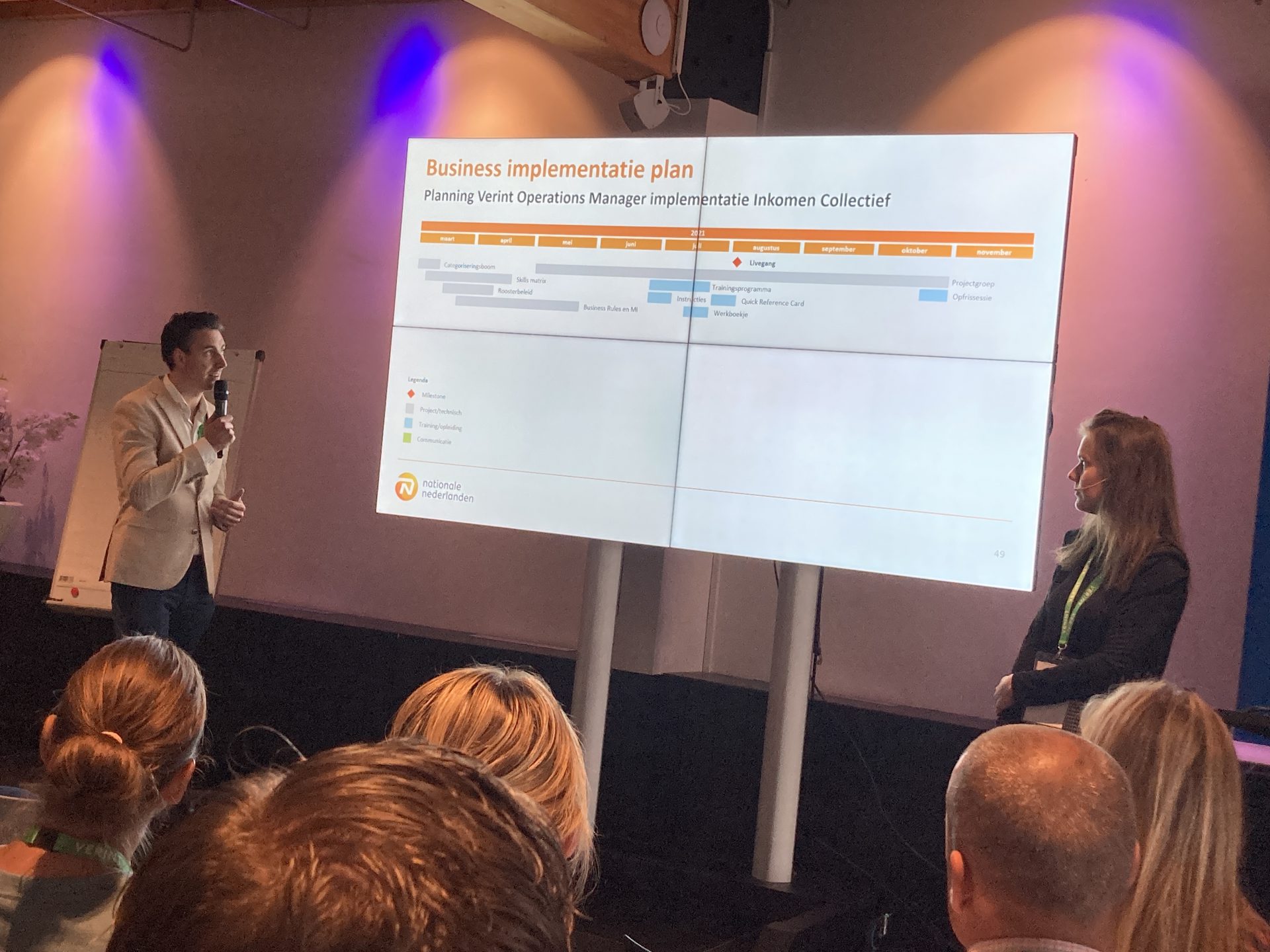
Nationale-Nederlanden and VodafoneZiggo share their experiences with using data to improve customer service processes.
-

The name change is part of a series of changes aimed at further growth and development of the online magazine.