
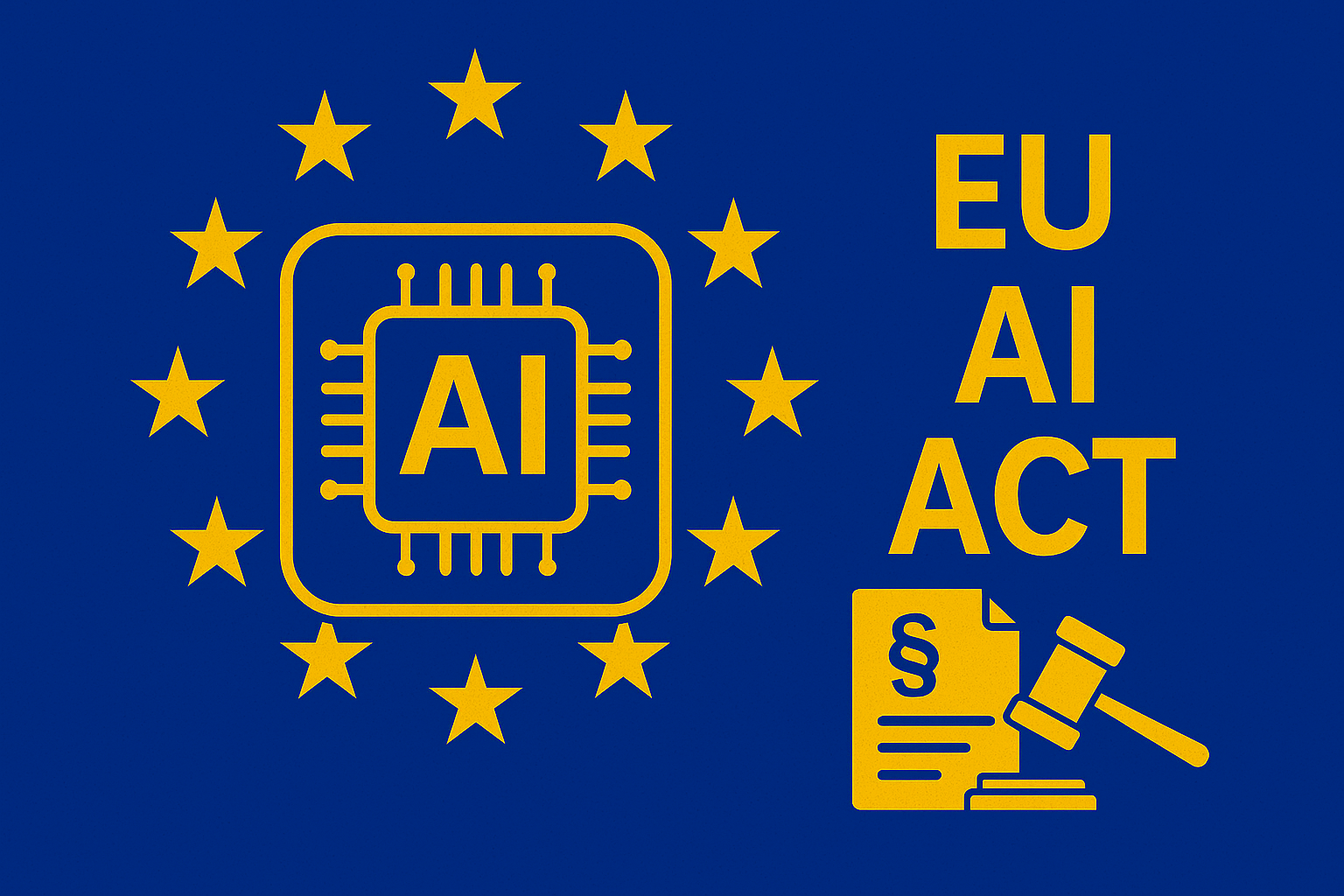
Image: Ziptone/GPT-5
The third phase of the EU AI Act enters into force on 2 August 2026. This phase focuses primarily on rules regarding transparency. Anyone wishing to be compliant must complete a list of actions before that time.
As of August 2, 2026, rules regarding transparency under the European AI Act will come into effect. The obligations are not particularly complicated.
First and foremost: anyone using AI in chatbots or voicebots must clearly inform the customer of this in advance. Therefore, as of August 2, chatbots may no longer 'impersonate' humans.
 The European Commission has additional last Monday guidelines communicated, which, among other things, clarify which providers and users must comply with the transparency obligations for interactive AI systems. The guidelines also prescribe how AI-generated content must be labeled. For this purpose, simple icons made available.
And secondly, organizations must be able to demonstrate and explain – including through documentation – how they use AI systems for applications such as selection or assessments.
And thirdly, rules come into effect for content (text, images, video) created using AI. Deepfakes and AI-generated content must be labeled as such. Standard labels are available for this.
Customer communication based on AI
That last group is of interest to the contact center. General, fully automatically generated information texts fall under the AI Act; it must be visible to the consumer that they were created by AI. Here, too, there may be a gray area for customer service. Response suggestions that a customer service representative reads first and then sends do not fall under the AI Act. However, an email drafted based on AI and without human intervention might well come close to the definition of an AI system that interacts directly with people. For all these obligations, the information must be available no later than before the first interaction with or exposure to the content.
demonstrating AI literacy
Another aspect is the start of enforcement regarding Article 4 (AI literacy) by Dutch market regulators. AI literacy, already mandatory since August 2025, entails more than completing standard e-learning. The EU AI Act is based on demonstrable knowledge tailored to the employee's role. An agent working with an AI-based agent-assist solution requires different knowledge than a WFM specialist using AI for forecasting.
Therefore, as of August 2026, it must be documented within your department or organization who has been trained in AI literacy and in what manner. The AI Act does not prescribe a specific course, a fixed number of hours, or a mandatory certificate. As an organization, you must determine what is appropriate for each position; you must be able to justify your choices.
Image: Ziptone/AI
Structure and offering of AI literacy training – There is a wide range of AI literacy training, can be found on the Repository of AI literacy practices of the EU AI Office. The offering here consists of collected best practices; no quality control has been performed. However, the EU AI Office does provide instructions for what must be sufficient.
In the Netherlands, we have it action plan “Getting Started with AI Literacy” by the Dutch Data Protection Authority. Furthermore, there are The National AI Course and the National AI and Ethics Course, both mentioned by the overheidIn addition, there is a substantial range of paid training courses available, often e-learnings of approximately thirty to sixty minutes with certificates and, in many cases, capable of being imported into your own LMS. Please note: some providers boast about audit-proof certificates, but the AI Act does not specifically require diplomas or certificates. Furthermore, a training course from 2024 may no longer be suitable for 2026. Since 2026, AI literacy training falls within the scope of SLIM subsidies.

Enforcement
The above rules are not optional, as national supervisory authorities are expected to enforce them from August 2, 2026. In the Netherlands, this is assigned to multiple supervisory authorities.
The Dutch Data Protection Authority (AP) and the National Inspectorate for Digital Infrastructure (RDI) will play a coordinating role in this. The AFM, DNB, sectoral supervisors, product regulators, and special actors within the administration of justice will also be included.
For customer contact organizations in the financial sector, the Dutch Authority for the Financial Markets (AFM) and De Nederlandsche Bank (DNB) are the most obvious regulators. For AI applications affecting multiple sectors, multiple regulators may be relevant simultaneously. A voice bot that assists customers with mortgage questions is relevant for both financial supervision and the privacy domain. Therefore, it is not always clear in advance who your primary regulator is. For other customer service applications, the AP is the designated party.
Postponement for the most severe category of AI
For those wishing to prepare for the next phase of the AI Act: the so-called Digital Omnibus Agreement was concluded in May of this year. With this, the European Parliament and the European Council agreed to postpone the most significant components of the AI Act. High-risk AI applications such as biometrics, work-related systems, and education will not come into effect until December 2, 2027. However, the transparency obligations will proceed as planned.
New task for the contact center: documenting AI
The tips are therefore: ensure that every AI application deployed in customer interaction clearly and immediately identifies itself as AI; document who uses which AI tools and what knowledge is required to demonstrate AI literacy; and set up an internal AI register to map all applications, including users, purpose, data, risk, and ownership. Such a register is not mandatory, but it is a tool to demonstrate compliance.
Code of Practice for Transparency
On June 10, the European Commission published a Code of Practice in which part of the transparency obligations is further elaborated. This voluntary Code of Practice describes the technical and organizational steps providers and users of generative AI systems can take to comply with the transparency requirements.
The Dutch Data Protection Authority (AP) advises organizations subject to these obligations to familiarize themselves with the code of practice and (parts thereof). to sign“By signing, you demonstrate in a recognizable way how you comply with the obligations,” says the AP. Organizations that sign before 6:00 PM on July 22, 2026, will be placed on the list of first signatories, according to the regulator.
(AP, Ziptone)


Also interesting
-
Trade union CNV wants to know what is happening in contact centers regarding AI training. The union calls on…
-

The new guidance goes into more detail about the legal obligation.
-

In practice, switching from one cloud to another is often accompanied by software and data challenges and…