
Stop thinking about the WFT training for your agents. Just a little while and the voicebot will be able to check the customer's identity and provide the customer with personal advice. Of course there are still some hurdles to overcome, but as confidence grows, smart solutions for compliance challenges such as customer identification are being worked on. Aegon explains its customer contact strategy and looks into the future of customer contact.
You can clearly see the trends in customer contact in Aegon's customer contact strategy. The financial service provider focuses on first call resolution, good accessibility and clear information provision. But the insurer's strategy also shows how centralization and decentralization of customer contact alternate. Until 2018, the translation of that strategy was visible in a central contact center with around 350 employees. This made employees more easily interchangeable and contributed to first call resolution.
From central to decentralized customer contact
In recent years, Aegon has seen the market and customer needs change dramatically. Aegon has tightened its strategy accordingly. Keywords are customer-oriented, agile, data-driven and digital. In the desire to realize improvements and changes more quickly, Aegon introduced self-organization in 2018, embraced agile working and radically adjusted the structure of customer contact. Decentralization of customer contact was therefore a logical step. The need for more agility – anchored in Aegon's mission and vision – has contributed to the fact that Aegon no longer has a central contact center.
Decentralized: room for customization in customer contact
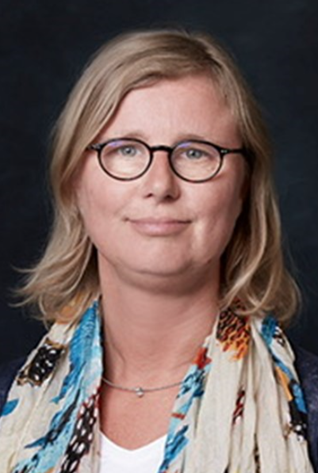 Since 2019, the various value streams – the new name of the business units – have been responsible end-to-end for their own customer contact. That gives more room for customization. “All value streams have one digitalfirst strategy, but there are subtle differences for specific value streams. For example, value streams can decide for themselves whether they want to blend customer contact with other activities. And for a value stream such as life insurance, we use a closed book strategy. There, less is invested in a state-of-the-art self-service environment than, for example, in value stream mortgages, which are growing strongly,” explains Ine Beljaars out. She is responsible for the Center of Expertise Customer Interaction and Digital at Aegon. Her role encompasses cross-value stream issues such as the digitalization vision, customer contact strategy, responsibility for all generic technology solutions, from CRM to WFM, and compliance and privacy monitoring of generic processes and systems. She knows better than anyone what is going on in these areas, because she used to be manager of the central contact center.
Agile working method, customer contact decentralized
Aegon's digital first strategy has not only ensured that customers can arrange more and more things themselves online, but also contributed to a significant drop in volume in analogue customer contact and a significant increase in NPS, according to Beljaars.
In addition, the digital-first strategy also better enables the company to continuously improve business processes from a customer experience or cost perspective. Alexander van den Wall Bake, innovation manager business automation. “Digitization helps us better understand what the contact is about; with that insight you can make adjustments at the right place in the organization. For example, to reduce unnecessary customer contact or to handle customer contact automatically – chatbots, for example, are getting smarter and better.”
Each value stream has its own innovation trajectory
 Value streams also have the option of setting up their own innovation processes, explains Van den Wall Bake. “Each value stream has its own innovation sprints. Innovation ideas can come from outside – in other words, from a technology push, in which vendors play a role – but the business itself also comes up with issues or ideas. Where necessary, Aegon tries to involve suppliers at the earliest possible stage. Together with a startup, we worked on automating the simplest mortgage advice for starters. Compared to the past, mortgages have become much simpler in several respects. In 2019, we set up a successful PoC (Proof of Concept), which will be put into production shortly. Experts then have to spend less time on standard mortgage advice, which means they can spend more time on complex advisory processes.”
The collaboration with startups is not new or unique. In the financial sector it has been quite common for a number of years to investing in partnerships with fintech startups, in order to boost its own innovative capacity. Aegon naturally also works according to agile principles in these types of partnerships. In principle, suppliers simply participate in this, according to Beljaars: "A matter of indicating what is expected in a timely manner and based on the backlog."
The road map
Because the customer contact teams work decentrally, it is becoming increasingly clear per value stream how customer contact that adds little or no value for the customer or for Aegon can be reduced. It is therefore logical that the mining environment is continuously expanded. Beljaars: “That ties in with Aegon's vision to enable customers to arrange their own financial situation and future.”
According to Van den Wall Bake, this starting point also offers starting points for developing more proactive services. “In combination with self-service, you end up with applications such as FinSnap, which allows you to simulate your financial future. We take into account that personal data lockers will be introduced in the future, whereby you as a customer retain control over which personal data we receive and may use instead of the other way around. With such a model, you as a consumer get the opportunity to let an advisor loose on your personal dataset – for example for proactive and detailed financial advice.”
The same applies at Aegon: there is no shortage of data; but in order to arrive at specific personalized and proactive services, that has a lot to do with trust, Van den Wall Bake estimates. Beljaars adds that in the long term it is important what Aegon's role will be: will the bank-insurer only continue to provide its own products and services or will the company develop into a platform where third parties will also provide services?
Preconditions for 'digital first'
To be able to follow this 'digital first' and data-driven roadmap, there are three important preconditions, according to Aegon. First of all, from a customer contact perspective, it is necessary to migrate to a cloud-based contact center. “This creates many more possibilities for customer contact in the field of data use and integrations,” says Van den Wall Bake. That migration is planned in the short term, but he does not yet say which platform has been chosen. “One of the first things we will tackle next is the analysis of the content of conversations. For example, we want to automate the manual logging of conversations. A logical next step is that improvements to the chatbot enable us to implement a voicebot that can also handle simple questions by telephone independently.”
The business case for a cloud platform
The decision to migrate now to a cloud platform for customer contact fits in with the trend that is visible throughout the industry. As far as Aegon is concerned, other applications should also be moved to the cloud AWS. A switch to a cloud-based contact center application was also considered a few years ago, but Beljaars explains that the business case was not conclusive at the time. Among other things, the depreciation period of the existing technology played a role. Van den Wall Bake emphasizes that cloud solutions have improved enormously in the meantime. “Usage costs have decreased significantly – the first cloud-based contact center solutions were quite expensive – and the implementation time has become much shorter.”
A second precondition for digitizing and automating customer contact is compliance. As far as Van den Wall Bake is concerned, this is not only about the privacy of customers and the access rights of employees. “Understanding context and nuances is still a challenge for bots. Compliance also relates to the reliability of answers generated by automated systems. After all, customers make decisions based on that and can derive rights from it.”
Data landscape in order
And finally, for a digital-first strategy you also need a healthy data landscape. Van den Wall Bake explains: “We have a clear data strategy within Aegon and as a result of this we have had a data lake for three years now, containing all our customer information. The challenge is in the opening. The my-Aegon environment already contains many integrations with specific resources. But unlocking the same information through channels such as chatbots, voicebots or WhatsApp is something else. For example, how can you be sure that you are providing information to the right person in this way? When, as with a bot, human control is lacking, fraud is also lurking.”
Personalized voicebot service?
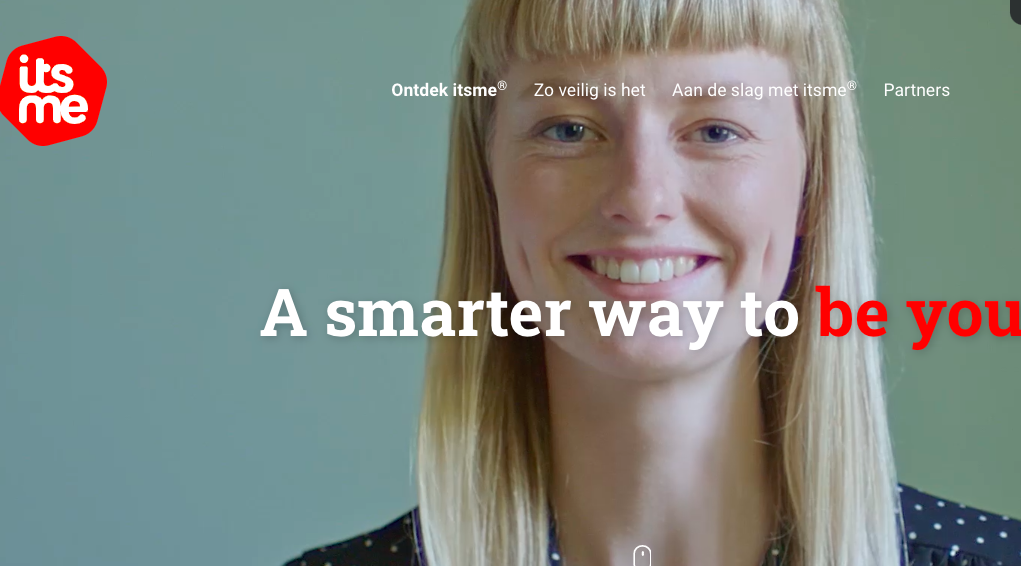 The question is therefore whether you place an application such as a voicebot inside or outside a secure environment, or whether you let a bot use identification solutions. The compliance issue surrounding the (voice)bot that offers personalized service could be solved with voice biometrics. Although this technology continues to improve, for the time being Aegon is mainly looking at the solutions that are becoming available from the 'digital government'. The Netherlands is lagging behind in this respect, in Belgium one in three citizens uses it Itsme, a public-private login tool. Aegon therefore eagerly awaits the moment the Digital Government Act has passed through the Senate, according to Van den Wall Bake. “The voicebot will need to have resources to ensure compliance. And that's more than requesting your date of birth and the name of your last pet, so to speak. Aegon is therefore closely monitoring the development of digital identities. After that, the financial sector can get started with various identification solutions.” And that brings the voicebot that can offer personalized service one step closer.
early adopter speech technology – Aegon implemented voice routing as early as 2010. By having the customer answer two questions ('What are your zip code and house number? And what are you contacting us about?') the call can be successfully routed to the right employee in 90% of the cases. The question is also displayed on the employee's unified desktop. In addition, the employee is proactively offered relevant information from Aegon's knowledge base that matches the demand. Aegon is not standing still when it comes to applying speech technology. Recently, the company partnered with Telecats implemented a variant of voice routing at the Mortgage Service Desk. Advisors who work with Aegon can now directly reach the right file handler by speaking the file number.
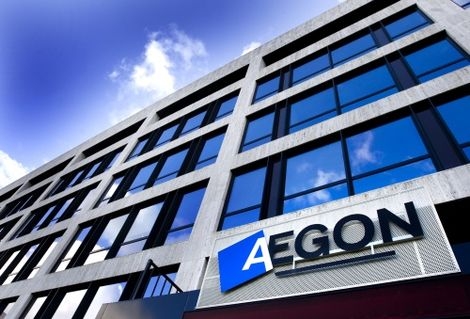
About Aegon Aegon is active in savings, insurance, investments, mortgages and pensions in 20 countries, turnover 27 billion, more than 23.700 employees worldwide, of which 3.500 in the Netherlands. The company is a merger product of AGO, ENNIA and a large number of life and pension insurers. Agility of the organization is explicitly included in the vision and mission of the company.
(Ziptone/Erik Bouwer)


Also interesting
-
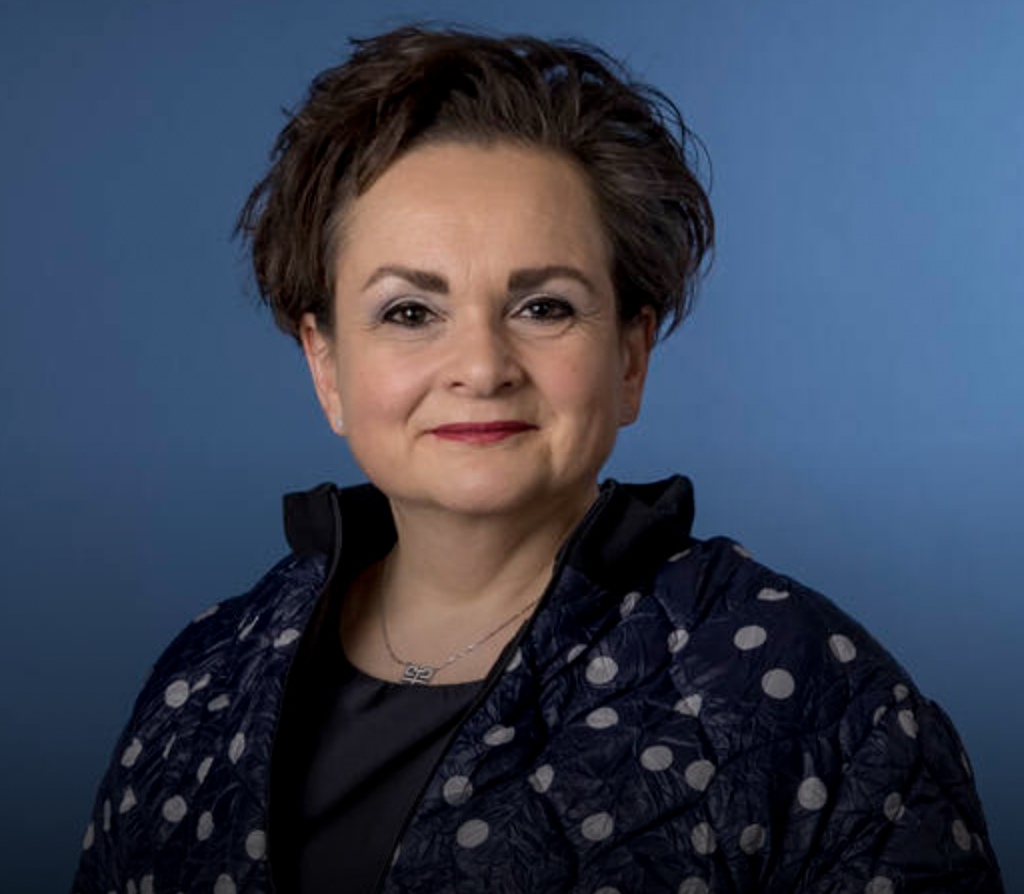
In the previous cabinet, Van Huffelen was responsible for settling the Supplements affair and was previously director of the GVB.
-
At the moment, Europe accounts for about ten percent of turnover, but the company wants to double that.
-
Aegon is switching from Avaya to Amazon Connect. This ensures acceleration and cost savings, but the implementation does require all…