
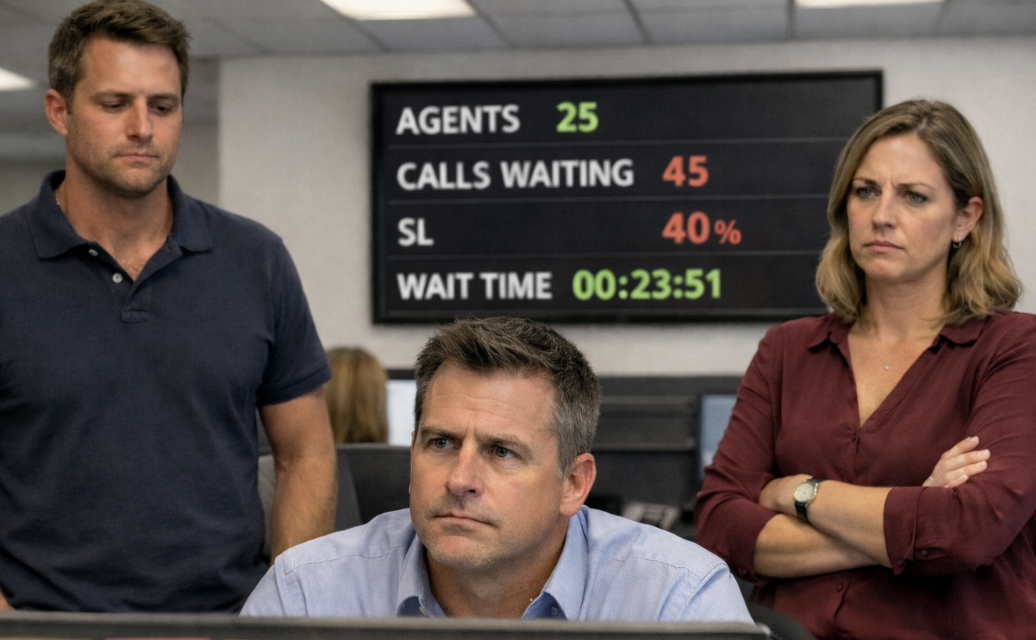
Image: Ziptone/AI
The last days of the year invite us to relax. A few Christmas drinks here and there, or an end-of-year party there, but generally speaking, there's little to do. I do take a moment to reflect on myself. What kind of year has this been for me? Have I been able to do what I wanted? What would I like to do differently?
Now that we've arrived in the new year, I see around me that I'm not the only one asking myself these questions. There's no shortage of New Year's resolutions. At the office, I see colleagues in front of the plank challenge. Coffee has been swapped for a juice that looks like it came straight out of the Chernobyl reactor. Alcohol and screen time have practically been made punishable. All noble initiatives in their own right. But why would anyone want to keep this up in 2026? And if you can't even keep up your personal resolutions, how difficult is that at work?
At work, you're not drinking alcohol every day, ideally. And if you work with people at all, you have meetings or conferences without Teams or Zoom. At work, there are different goals. I often hear that people want to be more organized. Self-direction, staying on track. Actually, less ad hoc.
Professional fast food
Any die-hard customer service fanatic will agree: ad hoc is part of the job. Some even go further. Ad hoc is the adrenaline that drives the industry. Just look around your own organization. That WFM person, camouflaged under the Post-it notes, doesn't inspire much more trust than the one with the clean desk? Don't those "can you just talk to me" calls you constantly receive actually deserve the title of "manager of the year"?!
Ad hoc is the fast food of our industry. It's easy to get and gives you instant satisfaction from your work. In the long run, however, it's unhealthy. For yourself, but also for the organization around you. The solution is within reach and really not as difficult as you might think. My three-step rocket is called "communicate, automate, invoice."
The plumber's faucet is leaking. The painter's door is peeling. The fact that our sector can't communicate fits perfectly into that list. Internally, at least. Why, I still don't understand. The average customer service department operates as secretly as a secret service. It could be so much easier. Clearly communicate the deadlines and the reason: the sooner your supply chain partners know what the schedule requires, the fewer last-minute requests you'll receive.
Do you have a moment for me?
Our sector is the perfect place for extensive automation. The systems allow for it, and there are some very bright minds working there. Fortunately, the days of manual reporting are decades behind us. Yet, we don't let systems do the work for us. A simple action like swapping—or adjusting the start or end time—of shifts can be done entirely through the scheduling tool. Yet, it's common for this to be done by email. Or, more often than not, Frans comes into your office singing. "Can you spare a moment?" Standardize the processes and let systems work for you.
The final stage of my three-stage rocket is expense reporting. Every self-respecting WFMer has one: a candy jar. Tip: empty it! This not only helps you get a step closer to your six-pack, but it's also a powerful tool against ad hoc work. Every time someone comes up with an ad hoc request, a euro goes into the jar. By the end of the quarter, you'll see that there's less and less ad hoc work. And you can go out for a nice dinner with the whole team.
New Year's resolutions aren't a sprint, they're a marathon. They require discipline, communication, and a bit of creativity. But believe me: if you work less ad hoc, coordinate better, and create more structure, your work will not only become easier but also more enjoyable. And who knows... you might actually stick to these resolutions. Unlike those gym memberships or dry January.
(Ziptone/Mark Elschot)


Also interesting
-

That annual Christmas dinner... it's surprisingly similar to the WFM meeting in a typical customer contact environment.
-
Completely reversing the work-from-home option isn't a solution to a leadership problem. It's a missed opportunity.
-
It doesn't matter which process you want to transfer or automate. First, make sure the process is in order and optimized...