
Unlocking customer data, a 360-degree customer view, getting rid of IT legacy, shortening lead times, serving the customer proactively and predictively: just a few of what is on the Air France – KLM to-do lists , WeFashion and Bridgestone stands. Salesforce put three seasoned customer contact professionals together, Ziptone reported.
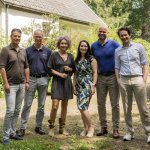
While The Heart of Service Summit of Salesforce on November 29, 2022 in the Beurs van Berlage, Salesforce and Ziptone organized a round table discussion. Theme: the customer service agenda. Customer service is never 'finished'. What still needs to be done to take the next step? At the table: Véronique van Houwelingen-Visser (Solution Manager Conversational Technology, Air France – KLM), Tanja Hoymann (Senior Manager Quality & Learning & OPEX Bridgestone Mobility Solutions) and Chris van Houwelingen (Product Owner E-commerce at WE Fashion). Ziptone editor Erik Bouwer led the discussion.
The customer stories at The Heart of Service Summit made it clear once again: the development of customer service has not progressed at the same level everywhere. Some companies still have to take steps that other companies have already taken. Where is your customer service department located?
 Chris van Houwelingen, WeFashion (CH): WeFashion only got off to a good start with e-commerce in 2010. As a result, we have grown rapidly in recent years and are now number 48 in the ranking Twinkle Top100. We are now making the transformation into a curated marketplace where other brands can also offer their products. And we ourselves are active on Zalando and Wehkamp, for example. The e-commerce activity has developed faster than the customer service organization. We are now facing the challenge that our customer contact center has too little data at hand - contact with our customers is a kind of blind date. Our ticketing system now runs on TOPdesk, originally a solution from the IT corner. When a customer calls about a previously sent e-mail, this still leads to two different tickets. The plan is to transform customer service from Service Desk to Profitcenter. Having a 360-degree customer view is crucial.
Tanja Hoymann, Bridgstone (TH): This is recognizable: know your customer the moment you have contact with him or her or can proactively get started based on analytics. We look back on a long history of fragmented data and departments that don't work well together. Bridgestone Mobility Solutions – known prior to the acquisition as TomTom Telematics – is oriented towards the business market and I think that BtC customer contact has developed a bit faster than in BtB. While the customers actually have the same wishes. Only recently has our organization become more focused on listening to the customer.
Véronique van Houwelingen-Visser, KLM Air France (VV): COVID has resulted in significant volume growth in our contact centers at our service organization. The corona pandemic has rekindled entrepreneurship, supported by senior management: many changes are now being implemented at a rapid pace. Until two years ago, telephony and e-mail were still quite fragmented, with different systems and mailboxes. We have just completed the rollout of Salesforce in all contact centers and are now fully engaged in automation and the implementation of further efficiency improvements. We know a large part of our customers, partly through our frequent flyer platform. That's the happy flow. KLM is 103 years old and AirFrance is 89 years old, so there is also the necessary legacy. A customer service employee can contact us in 25 different applications. We are going to unlock a large part of this via Salesforce.
So there is a lot of investment. That is somewhat at odds with the old image of customer service as closing post, drain or cost center. What's up with that?
VV We are still fighting that battle internally. The finance function still looks at the call minutes. But then I think: if we want to implement next best action for up- and cross-selling, the employee must be given extra time for this. As long as we view customer service as a cost center rather than a 'client retention center', this pointless discussion will continue. When you invest in customer retention, you can ultimately achieve more sales.
CH It takes some persuasion to get senior management on board. But if you include all your stakeholders in the process, it makes it more likely that they will see the value of customer service. During the corona pandemic, we suddenly had to close 180 stores in all kinds of countries. We have adjusted opening hours and deployed store employees for web chat. That really helped with the emancipation of the customer service department. Before the corona pandemic, WeFashion did not yet have a chat channel in use. In 2021 we received more than 46.000 chat contacts. Naturally, the volume did not decrease in the telephony channel. This also attracts attention within the organization. During corona, extra attention was paid to costs, but now that everything is more stable again, the development of customer service is going full steam ahead. For example, there is now recognition that social commerce has become more important, which has subsequently been properly addressed by the contact center.
 TH I think that for many companies, the amount of control has been released during corona. During the pandemic, managers only had data, but otherwise did not know exactly what people were doing behind their screens at home. Letting go of that has shown companies that customer contact employees are not just a cost item, but can also operate very independently. The next challenge facing the sector is optimally matching the right employee with the customer. Then we have reached a situation where we can have a full dialogue with the customer.
On the one hand we want a serious dialogue, on the other hand we are fully committed to automating and eliminating unnecessary and simple customer contact. On the KSF Annual Congress was said: if we continue to talk about customer contact in this way, it will not make the profession more attractive for customer contact employees - not conducive in a tight labor market.
CH Where you can automate, you should definitely do so. Two-fifths of the questions we receive are about the status of orders and returns. You can automate a lot in this area and then you will have more fun conversations in which there is more room for the 'personal touch'.
“Until recently, a voluntary rebooking of a flight took an employee 23 minutes – that includes various actions, assessments, recalculations in different systems.”
 VV As an airline, we have a complex business. Our initial training lasts six weeks. We have very good people on board. But customer contact work still involves a lot of repetitive administrative tasks. We have to get rid of that: take the robot out of the human. For example, we use RPA for a voluntary rebooking of a flight. Until recently, that process took an employee 23 minutes – that includes various actions, assessments, recalculations in different systems. RPA has so far shortened that by 4 minutes. Employees do not have to worry that their jobs will disappear. The work and the volume remain.
TH Above all, it should be about creating space for conversations that add value. That's better than an employee who has to click his way through 7 to 10 different systems – like with Bridgestone.
VV Employees in a contact center enjoy having conversations, being able to mean something to our customers, making connections. Extensive administrative actions do not make work better or more fun.
TH During corona, that human touch has only become more important. The customer also prefers to check the order status online rather than having to call.
Frans Reichardt went into his keynote (during the The Heart of Service Summit) on the amount of effort customers have to put in to get service – the customer effort score or CES. Reichardt turned it around: how much effort do companies actually make to make things easy for their customers and keep them on board?
CH That is a point of attention in our organization. Our goal is to exceed customer expectations, improve loyalty and create value with every customer contact. This includes proactive and predictive services. During the holidays, everyone wants to have their order delivered on time. If the delivery of a package may be delayed, we want to be able to notify the customer immediately.
TH We put a lot of energy into creating loyalty. With us, part of the team looks at our customers at least twice a year and then asks them how we can be of additional service to them. They chose us. If you invest in the relationship, it will become more sustainable and valuable. It's still reactive, but I think it's positive that we're doing this. We therefore do not measure CES, it is an old-fashioned metric that focuses on a transaction instead of lifetime value.
VV We only measure the CES in telephone conversations. I myself believe more in connecting silos. For example, many questions come from the web towards customer service, where the answer or solution can really be found or arranged online. You can also have to deal with silos and obstacles within an online environment. Think of an online check-in that fails. There is still some work for us to do.
What would you have liked to have arranged in order to become future ready and is therefore a high priority at the top of the agenda?
CH For us, realizing a 360-degree customer view is paramount. As mentioned, contacts via the various channels are not yet in one overview at the moment. We also want to be able to see all related customer data. And what is also high on the wish list is 'order on behalf of the customer'. This applies to a return if an item is damaged. We will not send a replacement item to the customer until the customer has ordered it. It is more pleasant for the customer if we send the replacement item ourselves when reporting the damage.
TH We still have work to do when it comes to making data available to employees. We also need to strengthen customer centricity in other parts of our organization – including a back-end developer who now rarely speaks to a customer.
VV I recently took my product team to the contact center. They stared. I recognize many of the agendas of the others here at the table. KLM – Air France would like to realize tooling in co-creation with the end user – that is often the customer contact employee. We already do that, but we can do much better, with more attention to service design. We also want to get the robot out of the human even more, so that the employee can approach the customer in a much more human way instead of working with systems. This also increases the speed of service, which is good for the company, the customer and the employee.
Discussion leader and text: Erik Bouwer, Ziptone
Image: Anja van Beijnum, Salesforce


Also interesting
-
AI does not replace customer service representatives. However, AI does take over parts of their duties. What does this mean for their profession?
-

Jae Lang has transferred from WEngage Paramaribo to Global Support Company, where he continues as WFM Planning & Traffic…
-

What lessons have energy companies learned from the 2022 energy crisis? What are they doing to be prepared for new peaks…