
 But... it will be the year in which organizations will have to reinvent themselves. This isn't just about renewing the operating model or making just the 'bread and butter' smarter (read: optimizing processes with fewer people). But above all, it's about fundamentally reexamining one question: why and how will I still be relevant in the future?
I often compare it to the internet. 2025 was the year many organizations "connected" to generative AI, copilots, and agents. But connecting doesn't necessarily make it a strategy.
Optimizing with AI feels logical and safe, but it is not enough.
I hope 2026 will be the year we discover what we can truly do with that connection. Optimizing with AI feels logical and safe, but it's not enough. Anyone who only becomes more efficient in 2026 will miss the point. The key question is: how do you figure that out?
My advice: think like a startup. But fictitiously. It's easier to innovate based on a new idea than on existing business. So, design a completely new startup for yourself within your industry. Use vibe-coding tools, Cursor, and AI Agents. Build a mock-up of what this company would look like—without the limitations of your current organization, processes, or revenue models. Only then will it become clear where the real opportunities lie and where you can disrupt yourself. And where you run the risk of being disrupted.
Research shows that technology only delivers a small fraction of the value of AI initiatives. The biggest difference lies in how companies are reorganizing their work. And it's precisely here that we see many organizations still stuck in pilots, experiments, and "explorations."
My prediction: By 2026, generative AI and AI agents will make a difference in customer contact in four ways:
- A frictionless customer experience – personal, relevant and always available;
- Extreme scalability – not twice, but 100 times or 200 times;
- Enabling disruption… or helping to prevent it;
- Finally more time for customers again.
Organizations that get this right save hours, not minutes. Employees experience less repetition, less pressure, and more opportunity to truly add value. Not because they work harder, but because the work is structured differently.
So the question isn't whether your organization changes. The question is whether you drive that change—or experience it.
Therefore, this recommendation for 2026: plan a strategic session to design that fictional startup. Involve both business and IT. Use the results not as a threat, but as a direction. Not to overhaul everything tomorrow, but to clarify where you need to go. The organizations that will lead the way in 2026 won't be those with the largest IT budgets. They'll be the organizations that dare to ask: if we were to start over today, what would our customer contact look like?
(Ziptone/Job van den Berg)


Also interesting
-

The Mantelzorglijn is part of the MantelzorgNL association and was founded 25 years ago. "It helps that we don't…
-

Marion van den Brink has passed away. Van den Brink was a well-known face in the Dutch call center sector for a long time.
-
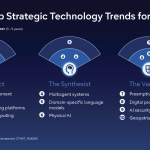
Relevant for customer contact and customer service include Multiagent Systems, Domain-Specific Language Models, Physical AI and Geopatriation.