

Image: Ziptone
AI entrepreneur and Ziptone columnist Job van den Berg recently traveled to China with a group of fellow entrepreneurs to find out: how do Chinese companies deal with generative AI and agentic AI? Ziptone spoke to Van den Berg in the run-up to the publication of his new book (written with his partner Remy Gieling) about AI agents.
For those who have never been to China, how would you characterize its society and economy in technological terms?
I have to admit, I totally underestimated China; it’s all happening even faster than expected. China has been catching up in the past five years. For example, more than 200 new electric car brands have been launched in a few years, many of which have self-driving options.”
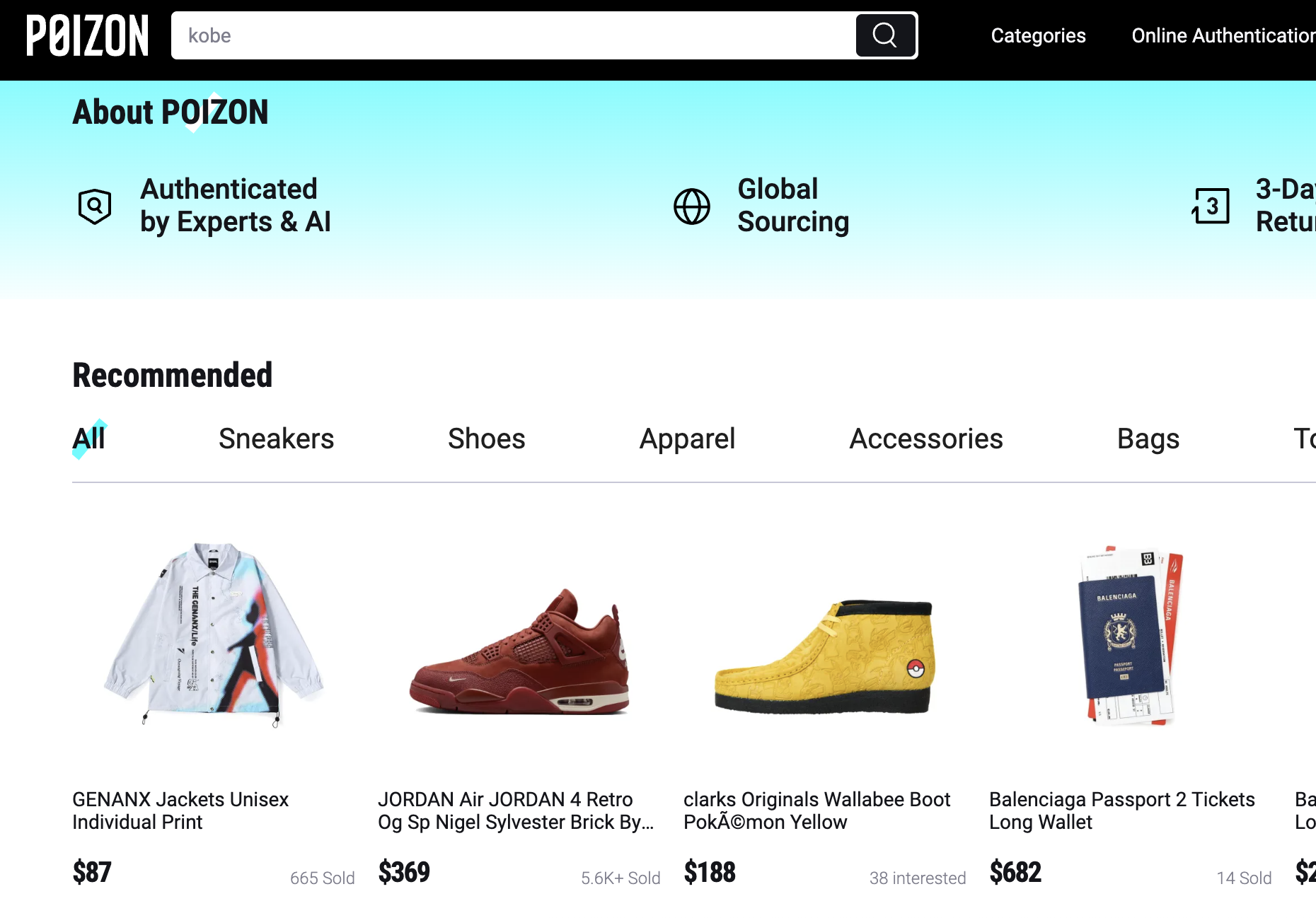 “We (Remy Gieling en Job van den Berg, ed.) regularly went to Silicon Valley in the US until recently. But we felt like we were missing something. We came to the conclusion that we only had a limited view of China, where developments are also moving very quickly. As far as we are concerned, going to see for yourself provides the best information. We visited fifteen companies, including Meituan, the largest and most successful home delivery app that makes 60 million deliveries a day. And POIZON, a leading e-commerce marketplace focused on luxury fashion items that has developed an algorithm that can accurately determine whether branded clothing is actually genuine. One of our most important insights is that AI is interwoven into all processes at many companies. There is sufficient supply of computing power and sufficient capacity to develop our own AI models.”
“There is a huge ambition in the country to make China very successful in AI. There is a huge labor pool, there is enough urgency and there is an abundance of data. In the field of predictive AI, they are currently further ahead than the US.”
Agentic AI: (not yet) on the Chinese agenda

Job of the mountain
What is striking, however, is that most of the energy is being put into predictive AI. Agentic AI is hardly a topic in China, Van den Berg noticed during his visit. He attributes this to the labor market not yet being completely dominated by tightness. There are also fewer challenges in the area of productivity and backend processes.
“There is less urgency to organize processes smarter and to automate more. And at Trip.com, the Chinese version of Booking, we understood that there is not much willingness to automate customer service processes – they prefer to use people for that. Labor is still relatively cheap in China. I think that the country will only start working with agentic AI in about five years. For the time being, they seem to be mainly focused on data-based processes and analytical AI. As mentioned: there is a lot of data available. POIZON has based the algorithm on 150 million variables, review data plays a major role in this.”
In other words, in the country where counterfeiting is a business model, the 'real' brand is a status symbol.
Virtual shopping
WeChat, the all-in-one app of parent company Tencent, is still leading, next to Amazon clone Alibaba. Chat is an important channel in China, also to build relationships; both business and private are mixed, Van den Berg explains. In addition, WeChat does not share data, which makes it difficult to work with attribution in campaigns.
Another phenomenon he has noticed is virtual shopping via fully AI-generated live streams where you see a store interior and a presenter on your screen: very popular with the Chinese, but definitely not a classic online webshop and not to be confused with the metaverse.
Automating two thousand customer service jobs per week
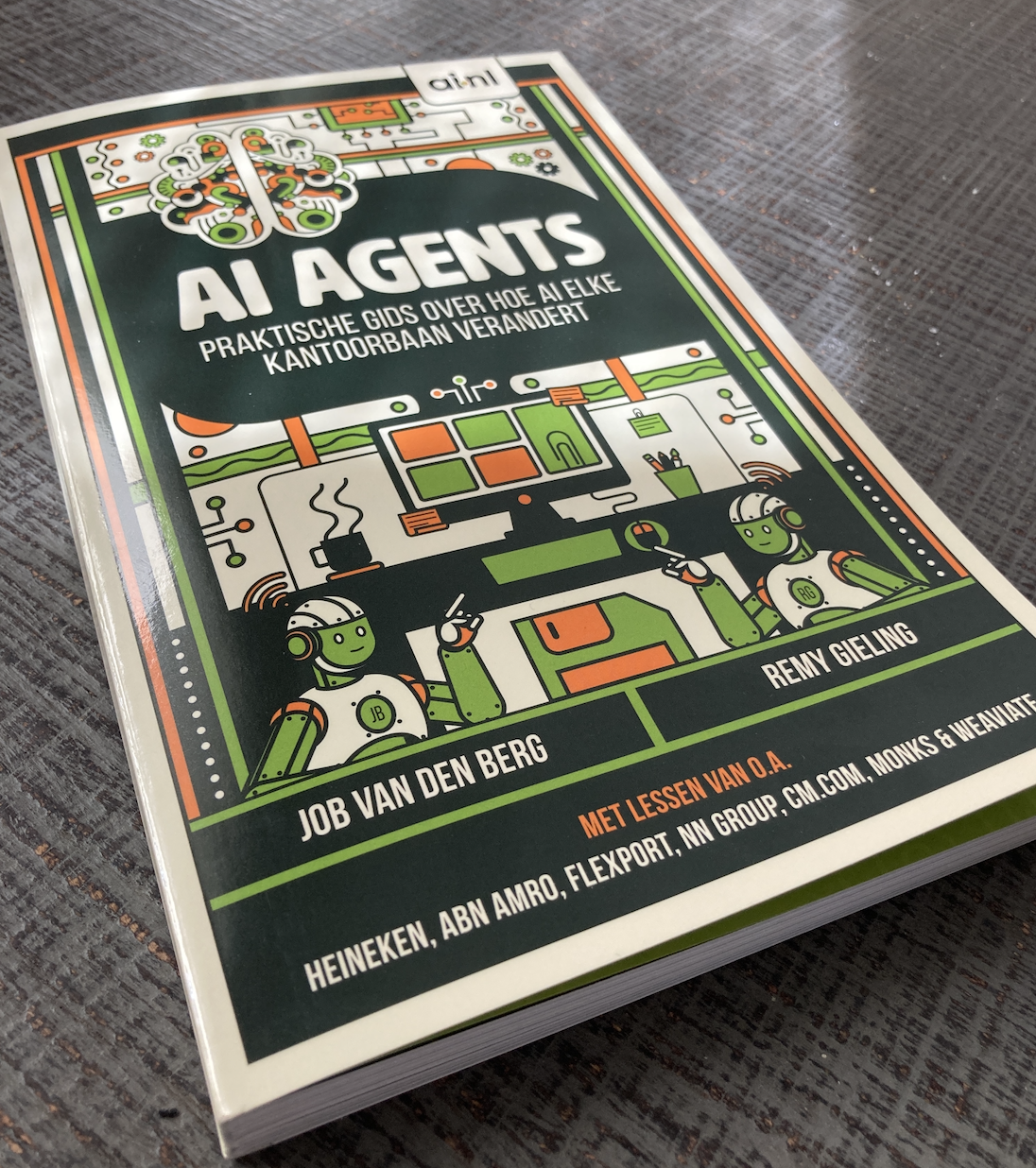 Then the book – the fifth in a relatively short time – with the title 'AI Agents, practical guide on how AI changes every office job'. "It's about the rise of AI agents: AI models that can perform tasks independently," Van den Berg explains. For the record: an AI agent has a memory, has access to tools and applications and has a schedule. In China they may be less relevant, in the US the developments around AI agents are moving very fast.
“We were last in the US in October 2024 and AI agents were a big topic there. Many companies are implementing that technology. In the US, it is the AI agents who, individually or in groups, independently send out quotes, handle emails, and review contracts. In the US, this is really becoming a race: who will pick up this technology the fastest?” The book also features Bland.ai, a company that automates 2.000 customer service jobs per week. The company does this with a team of six people; Bland.ai recently raised 40 million euros in capital.
Pieter Jansen, founder of a successful cybersecurity company (Cybersprint, sold), invests in Dutch digital security start-ups. In the FD he says in an interview: “I was in San Francisco at the end of last year, at a company called Bland AI. They are replacing call centers with AI. That could be a huge problem for the Philippines, where there are a lot of call centers. You already see investors converting call centers in that country into hotels.”
Changing jobs
“Our jobs will change dramatically in the coming years. In the US, speaking with AI-based voice bots, which work together with other specialized bots, is already very normal. Think of Flexport, the best example where bots work together with truckers to plan extra loads on routes, including a bot that calls the trucker, communicates and then reports back. We are now setting up a similar collaboration between specialized bots for the ANWB. In the book we have included fifteen interviews with many lessons learned. And a foreword by FD journalist and economist Mathijs Bouman.”
Customer facing AI?
The greatest added value of agentic AI is currently at the 'back end' of companies, where sluggish processes create the most urgency. The customer-facing side of agentic AI – think of 'book a trip for 2 people, next weekend, to New York' or making outbound calls – is not really on the radar of companies at the moment, Van den Berg thinks. Also because of the EU AI Act – you are not allowed to simply call consumers using an AI voice agent.
Nevertheless, developments are moving at breakneck speed. So it makes sense to ask about the shelf life of this book. “Certainly several years,” is Van den Berg’s conviction. “The book is mainly about the foundations. What is agentic AI? How does it work, even if you look under the hood? It contains step-by-step plans. It is almost a textbook. In his foreword, Mathijs Bouman says: 'We are now approaching the era in which computers will finally start working for us.' What that means for organizations and leadership, we will also discuss in this book. Because this is another major transformation and you have to manage it properly, with sufficient speed. The book is also about urgency, which is not yet felt in the Netherlands.”
(Ziptone/Erik Bouwer)


Also interesting
-

CCaaS provider NiCE and BPO service provider Konecta are entering into a strategic partnership for agentic AI in customer contact.
-

Transparency of decisions must be part of AI systems from the outset; essential for accountability to citizens and regulators.
-
The consumer is going to build a complete agent team for the household themselves.