
 The DDMA, which now stands for Data-Driven Marketing Association, celebrates its twentieth anniversary this year. The DDMA itself is stable, but the field is under pressure: regulations surrounding forms of direct marketing are imposing increasing restrictions. Ziptone spoke with Judith Oude Sogtoen, director of DDMA for over a year, about the present, past and future.
To sort out the history of the DDMA and its predecessors, Judith Oude Sogtoen, who had been on board with the DDMA as director for more than a year, had to delve into the annals. That DDMA history (see also box below) has peaks and valleys. After the demise of predecessor DMSA, the new interest group is in any case successful in terms of membership and as a knowledge institute.
“In recent years, Diana Jansen (the previous director, ed.) and her team have expanded the DDMA into what it is today. The start of the DDMA was quite complicated, because after the bankruptcy of predecessor DMSA there was hardly any budget and the tide was also not favorable. Three committees were started: list broking, i-Lounge and the legal committee. In the beginning, the emphasis was on regaining trust from the sector.”
Around 2006, the DDMA increasingly focused on the broader aspects of data-driven marketing. This shifted the focus from traditional direct marketing to the use of data and technologies for marketing purposes. A lot of attention was paid to privacy and ethics - while the GDPR was not yet on the radar. With the committee structure with subject specialists, the DDMA has gradually grown in membership numbers and in its position as an authority. “There is now a team of sixteen paid employees and 120 volunteer specialists who sit on 13 different committees. That's where the events, benchmarks, research and publications come from," Oude Sogtoen summarizes.
Judith Oude Sogtoen Before joining DDMA, she was director of fundraising at AMREF Flying Doctors; She previously worked as an interim worker for a large number of clients in the field of marketing, data and CRM: from broadcaster VARA to RAI. Oude Sogtoen studied Marketing at the RUG, among other things.
Certified influencers
The DDMA committees move with developments in the field, which is why the listbroking committee no longer exists. The artificial intelligence committee, on the other hand, has been in existence for six years. This has also been the case for the past two years influencermarketing has become a topic for the DDMA. There is even a certification for influencers. “More than 1.400 influencers have already been certified and there is still a lot in the pipeline,” says Oude Sogtoen. “Advertisers such as L'Oréal, Unilever, Heineken, Coca-Cola and TUI support this initiative and have indicated that they will only work with certified influencers.”
Together with Stichting Reclame Code and Bond van Adverteerders (bvA), the DDMA launched the 'Certified by influencerrules.com' initiative in April this year, consisting of an e-learning for influencers and a public register. According to the initiators, advertisers must take their responsibility, especially because many influencers are not yet well informed of applicable laws and regulations.
Legal expertise and support
Characteristic of the current DDMA and the focus on data is the legal team of four specialists in the field of privacy and legislation, says Oude Sogtoen. “This allows us to properly support the sector as a data-driven field. The DDMA was also a forerunner in the field of privacy: we already had the Privacy Guarantee quality mark well before the GDPR came into effect.”
One of the most significant changes for the field is the shift to consent-based marketing. At the moment it is mainly amendment by Members of Parliament Flach and Postma, whereby an amendment to the energy law has been used to further restrict telephone sales. Field marketing is politically about the possible introduction of a cooling-off period, which would no longer allow direct sales at the door. “That has a major impact on the marketing sector,” says Oude Sogtoen. “Only charities, publishing houses and lotteries with an idealistic objective would be excluded.” The DDMA has the effect of the intended changes are listed.
Is further restriction necessary?
The amendment has been adopted by the House of Representatives and will be discussed in the Senate in the coming months. The DDMA is pushing for discussions with members of both Houses to push the law change in the right direction, says Oude Sogtoen: “We especially want to draw attention to the consequences of the Flach amendment and also look at its legality. The proposal is not legal from European law. In addition, we draw attention to due care: what shows that these changes are necessary? We have not received any research into, for example, the number of complaints. Discussions will take place in September.”
It is a difficult time for telemarketing and field marketing, notes Oude Sogtoen. “Former minister Adriaansens wanted to completely ban both forms, something that is not possible under European legislation. Moreover, the upcoming changes would only apply to the energy sector, but they are broader in scope. But advertising is also under the magnifying glass: consider possible restrictions on advertising for air travel or meat.”
Energy sector: hand in hand?
It does not come out of the blue that the revision of the Energy Act was used to tackle telemarketing. The energy sector in particular makes extensive use of telemarketing, which also regularly involves the use of rogue subcontractors or subsubcontractors. Apart from the demise of it CIRE quality mark the energy sector fails to regulate this channel itself. Doesn't the energy sector also have its own responsibility?
Oude Sogtoen: “Yes, of course the sector has that. However, we have no insight into how they outsource and which subcontractors are involved. We have a self-regulation code. This was revised in February and is available at the Advertising Code Foundation. We are in discussions with the ACM about enforcement. We believe that there should be more enforcement. And of course we speak to the energy sector. It is important that action is taken against rogue telemarketing companies. But we don't cover the entire chain.” The Energy Sector has revised its own quality standard and this has led to the 'Quality standard for advice on energy contract offers to consumers'.
Trigger-based marketing
Then the future. Do recent technological developments in the field of data and software possibly provide an answer to the increasing legal restrictions? Anyone who follows the marketers will read about 'data driven', 'personalization' and 'trigger based'. “Being relevant to the consumer is indeed essential. There are all kinds of tools and solutions for this. In addition, it is good to look at diversification within marketing: by using other activities and other channels, from social media to chatbots.”
In the customer contact area, cross- and upselling have gained relevance through AI, such as methods such as Next Best Action. Are customer service departments on the DDMA's radar?
“We organize events and publish publications where we highlight innovative cases. We do this in collaboration with the experts from the Telemarketing and Artificial Intelligence committees.”
AI or no AI: consumer trust is the starting point
Companies are being forced to stop telemarketing that causes irritation, but more and more solutions are being developed for proactively approaching customers, also based on AI. In combination with personalized and therefore relevant, proactive customer contact could possibly receive more appreciation from consumers.
“It already happens that, for example, your bank approaches you to review your insurance,” Oude Sogtoen explains. “But implementing things such as proactive customer contact and next best action place high demands on your data management and processes. I do think that there will be an acceleration in this area due to developments in the field of AI.”
The history of marketing is difficult to describe; in 'The Canon of Marketing' Wilbert Schreurs begins in 1926, when the concept of marketing is used for the first time in the trade magazine De Reclame. The Direct Marketing Institute Netherlands (DMIN) was founded in 1981, later renamed Direct Marketing Association and DMSA. The DSMA had a code of conduct based on opt-out and also managed an opt-out register, with which consumers could unsubscribe from spam and advertising, an approach that met with considerable resistance.
The success of the annual DM days later became its downfall: in 2002 the DMSA went bankrupt. At the end of 2002, a new trade association was established: the DDMA (Dutch Dialogue Marketing Association). Spam and telemarketing were big issues at the time; attempts at self-regulation (including by Info filter and the Do not call registry) were followed by increasing legal restrictions surrounding direct marketing and telemarketing. Until then, contact centers were partly represented in the Telecommerce council of the DMSA, but that council was not included in the new DDMA. Instead, a new trade association for (in-house) contact centers was founded: the Association Contact Centers Netherlands (VCN), which in turn formed the basis of the Customer Service Federation. The DDMA currently has more than 360 members. The 20th anniversary is celebrated at the end of the year with an end-of-year conference, followed by an anniversary party.
(Ziptone/Erik Bouwer)


Also interesting
-

Our members are still struggling with issues at the intersection of data and governance, says Judith Oude Sogtoen of DDMA.
-
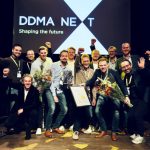
The DDMA Transformation Award 2025 is a prize for organizations that are leading the way in the responsible and innovative use of data.
-

The entrepreneurs, who have been causing a continuous stream of problems for years, are appealing the ruling.